
Steel Panel Formwork: The Modular Shuttering System and the Fasteners That Hold It Together
A modular steel panel kit looks like a simple purchase. Panels of a standard width, a set of walers, a bundle of couplers and a box of nuts, delivered to site and stacked by the panel wall. The procurement reality is that the panels are the cheap, visible, easy-to-count part, and the fasteners are precisely what decides whether the panel wall stands up. The great majority of modular formwork failures are not panel failures; they are joint failures that arrived as an incomplete kit.
This article treats the fastener set as the controlling item. Coupler is the connector that joins two panel edges and transfers shear across the joint; connecting nut is the threaded piece that draws the two panel lips together onto the coupler. Wedge bolt is the anchor that positively ties a panel into its waler or rib, and waler is the horizontal member that spreads concrete pressure across several panels. Get this four-part relationship right and the individual panel is whatever the drawing says it is; get it wrong and no panel thickness whatsoever will save the pour.
In brief: the individual panel count comes from the panel wall area and the bay size, while the coupler count comes from the joint count. The wedge bolt count comes from the individual panel count per waler line, and the modular kit only pays if every one of those returns complete.
The purchase sits inside a regulated frame rather than outside it. Formwork design and execution are covered by EN 13670, which is the European execution standard for concrete structures and which assumes a competent temporary works designer rather than a catalogue selection. In the United States the working practice is anchored to OSHA 29 CFR 1926.703, which treats formwork as a load-supporting structure in its own right. Neither document tells a buyer which coupler to order. Both of them tell a buyer that the connection detail is not itself a discretionary choice, which is the point.
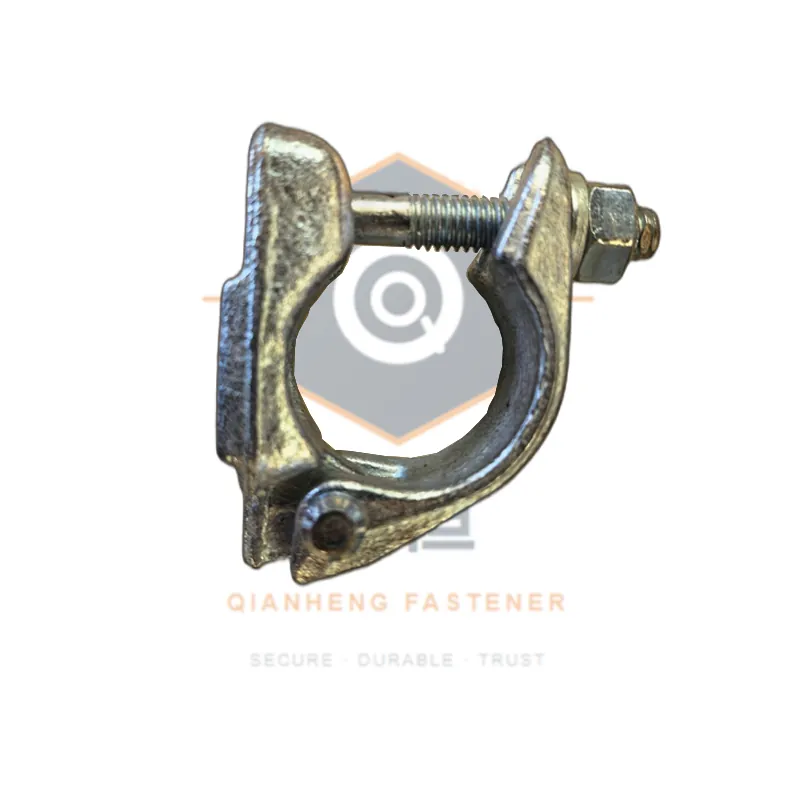
Coupler is the connector that joins two panel edges and transfers shear across the joint. Connecting nut is the threaded piece that draws the two panel lips together onto the coupler. Wedge bolt is the anchor that positively ties a panel into its waler or rib. Waler is the horizontal member that spreads concrete pressure across several panels. Shear tear-out refers to the failure at the individual panel lip where the edge profile is too shallow for the coupler.
1. Why modular steel is bought as a modular kit and not as panels.
The reason a modular system exists at all is repetition. A wall built from identical panels, tied by identical connectors, struck and reused in the same rotation, amortises its own cost over turns. A one-off wall with irregular geometry destroys that economics, because the individual panel set cannot be reconfigured and the recovery rate collapses. This is the same argument that separates a timber soffit from a steel table form, applied panel by panel rather than bay by bay.
Procurement therefore necessarily has to settle one question early before any price is meaningful: how many identical lifts will this kit serve. A residential block with twenty identical wall panels per floor repeats twenty times and repays a modular kit. A single basement core with fourteen different panel sizes repeats nothing, and the honest recommendation is simply a timber or film-faced panel solution with throwaway connectors instead. Modular suppliers who quote a modular kit to a one-off core are quietly selling a utilisation problem.
The second question is the reset rate, because the modular kit only pays when it eventually comes back complete. A crew that can strike and completely reset a bay in one shift will take twenty turns; a crew that spends the first two shifts hunting for couplers will take six. The hardware determines the reset rate more than the labour does, which is precisely why the coupler and nut count belongs in the bill of materials rather than in a consumables note.
2. The coupler is the joint, not itself a bracket.
The single most common misconception in modular formwork procurement is that the coupler is a bracket. It is not. A bracket carries a load from one member into another. A coupler joins two panel edges directly, and it does so across a joint that concrete pressure is actively trying to open. That makes it a shear and tension component in a demanding dynamic load case, and it is the reason coupler grade is categorically not interchangeable between panels of differing edge profile.
Three distinct failure modes account for almost all coupler problems in actual service. Shear tear-out at the individual panel lip, where the edge profile is too shallow for the coupler and the metal tears rather than the bolt failing. Thread wear in the connecting nut, where the nut has been run up and down too many times and no longer clamps at the same torque. Cross-mixing between panel types, where a coupler from a heavier edge profile is fitted to a lighter one and the joint is under-specified by geometry alone. None of these are rarely visible on delivery, and all three appear together as a bulging joint on the first or second concrete pour.
The correct procurement response is to specify the coupler against the individual panel, not against the project. Ask the supplier to positively confirm which panel edge profile each coupler is designed for, what sheet thickness the lip must have, and precisely how many cycles the coupler is rated for in that joint. A catalogue coupler with no profile reference is a coupler that will eventually be mistakenly fitted to the wrong panel.

3. The connecting nut sets the stiffness of the whole wall.
The connecting nut is a very small part that carries an outsized responsibility. Its job is to pull the two panel lips against the coupler body such that the joint develops friction as well as metal-to-metal shear. Under-bolted joints rely almost entirely on the coupler, and they leak. Correctly torqued joints develop the full friction of the two lips bearing on each other, and the finished joint becomes considerably stiffer than either panel.
This is why torque matters more than bolt count on a modular wall. Two panels with six properly torqued connectors produce a demonstrably better wall than two panels with eight loose ones, because the loose ones add weight and labour without adding any additional joint capacity. The specification should therefore carry a torque value, a tool reference, and a re-torque interval for the first pour. The first pour is when a joint settles, and a torque check then catches the panels that are not yet bearing correctly.
Reuse is the second half of the nut problem. A nut that has been clamped and released a hundred times has a worn thread and a spread thread face, and it will register as tightened when it is only finger-tight. Replaceable connecting nuts are a consumable line in the bill of materials, not itself a fitting, and treating them as fittings is how a modular kit quietly runs out. The recovery loop that returns tie hardware to a marked bay necessarily has to include a nuts box with a counted quantity, because the smallest part in the modular kit is the one that disappears first.
Standard basis: EN 14399-1
4. The wedge bolt and what it anchors to.
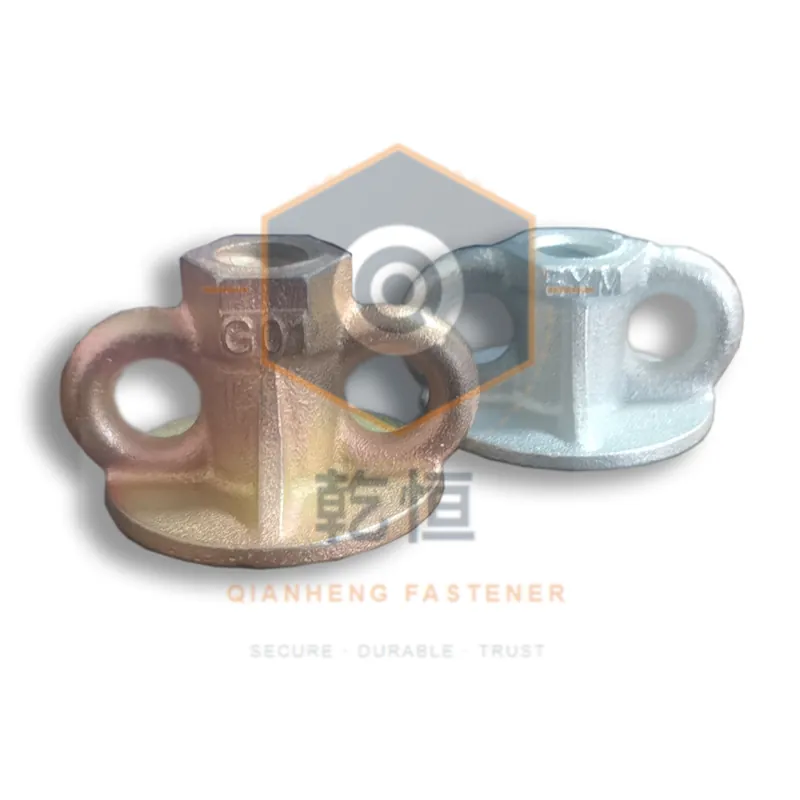
The wedge bolt, slot bolt or hook bolt physically ties a panel into its waler or into its rib. It is the single component that most directly resists concrete pressure trying to push the individual panel out of position. Unlike the coupler, which works in the plane of the panel wall, the wedge bolt works through the thickness. Its load path is straightforward: pressure pushes the individual panel, the individual panel pushes on the rib, the rib pushes on the waler, and the waler bolt takes the entire load into the waler or the tie.
Because that load path is direct, the wedge bolt is where a genuinely detailed procurement specification earns its keep. Three things determine whether it works. The panel thickness and hole pattern must match the bolt length and washer, and a bolt one size wrong either will not properly seat or will not develop the bearing area it needs. The bearing area behind the individual panel must be continuous, because a rib with a gap in it converts a bearing load into a bending load on the skin on the individual panel skin. And the anchorage at the far side must be sized such that the waler does not simply rotate.
The connection geometry is also where the loading standard matters. EN 13670 requires that formwork and its supports be designed for the loads they will carry, with adequate margin, and that the arrangement be verified by calculation where the geometry is unusual. The practical translation for a buyer is that a panel drawing which shows a bolt without a bearing length behind it has not met that requirement, regardless of how the individual panel is described in a brochure. The same logic appears in US practice, where the formwork provision in OSHA 29 CFR 1926.703 places the responsibility for a sound connection on the party that designs and erects the system.
There is a fourth, commercial point about wedge bolts that is routinely skipped. They are counted per panel per waler line, so on a modular kit with many small panels the bolt count consequently becomes the largest single fastener line in the bill of materials. A supplier who quotes panels and walers and then treats the bolts as an afterthought entirely is signalling that the modular kit has been costed from a panel count rather than from a joint count.
5. Waler connections and the whole-kit reality.
The waler is what turns a row of connected panels into a wall, and its connection back to the individual panel system is where the modular kit either holds its geometry or permanently loses it. A waler that is properly tied into the individual panel ribs at the designed spacing keeps the individual panel line straight under pour. A waler that is tied loosely, or tied into a panel that has been reconfigured, produces a wall that visibly racks as it fills and a soffit line that ends up out of level at the top.
The panel geometry is also governed rather than free. European practice under EN 13670 expects the formwork arrangement to be capable of developing the design pressure without unacceptable deformation, and a mis-spaced waler connection is the deformation that shows up first.
The kit reality that is worth naming plainly is this: a modular set is physically delivered complete precisely once, and then consumed gradually. Every single cycle removes some couplers, some nuts, some wedge bolts and a fair share of panels that eventually come back damaged. What returns after eight or ten cycles is rarely a complete kit. Procurement should therefore plan for a replenishment line from the first delivery rather than treating the initial kit as the whole requirement. The hardware inventory and recovery approach applies directly, with the counting done at the individual bay rather than at the yard.
For the waler itself and how its section and splice are specified, the steel waler systems article covers the engineering side. For what a flat-plate panel costs against an angle-steel framed panel, the answer genuinely depends on the pour height and the crane access on the site. The useful thing a supplier can give is the individual panel deflection figure at the intended pour height rather than a generic panel description.
Standard basis: ISO 898-1
6. Specifying a modular kit that arrives complete.
A modular kit specification should always be written as a count, not as a system name. The elements that necessarily have to appear as separately identified line items are the panels by dimension, the walers by section and length, and the couplers by edge profile. The connecting nuts, the wedge or slot bolts by length, and the anchors back to the previous lift belong there too. Anything left merely as a system reference is a line that will always be delivered short.
The second discipline is the acceptance check. A kit must be counted against the drawing take-off at the point of delivery, and the count must distinguish the parts that are genuinely consumable in operation from the parts that should return. Couplers and wedge bolts are expected to eventually come back; connecting nuts are expected to be partially consumed in normal use; panels are expected to eventually come back damaged at a predictable rate. Procurement that treats all three as the same category will either systematically over-order consumables or under-order replacements.
The third discipline is the paper trail. Modular kits cross borders and cross both borders and sites, and a modular kit that has been assembled afresh on the project site from a supplier original pack is notoriously hard to value on resale. A kit delivered complete, counted, and recorded by component is an asset that transfers. This is the same argument the hardware cost structure article makes from the financial side, applied to one specific system.
7. Worked example: a 400 square metre modular wall package.
Consider a residential block with twenty identical wall panels per floor and six lifts. The wall area is 400 square metres per lift and the modular kit necessarily has to serve every one of the six lifts, such that the requirement is 2400 square metres of panel with a full turnover. Taking 600 mm by 1200 mm panels, a single lift needs roughly 550 panels, and the modular kit is sized to carry a single lift at a time with a small float rather than a single lift per crane bay.
The fastener count is where this example most often surprises buyers. With roughly four couplers per vertical joint and an equivalent on the horizontal joints, the individual panel count implies several hundred individual couplers, and the connecting nuts follow at one per coupler. The wedge bolts are counted per panel per waler line, which on a conventional two-waler panel at three bolt positions for each line makes them the largest single fastener line in the modular kit. The consumable allowance should be carried for the nuts and a percentage of the wedge bolts from the first delivery. On a twenty-turn reuse cycle the nut and bolt attrition is predictable, and the panels are demonstrably not the limiting item.
The arithmetic result is that the fastener set itself typically carries substantially more than half the total value of the modular kit while weighing less than a tenth of the shipped weight.
That ratio is exactly why a fastener-focused supplier is worth talking to for a modular package, and why a panel supplier who leaves the fasteners entirely implicit is not quoting precisely the same thing you are buying.
8. What to check before the modular kit is dispatched.
A modular kit should be accepted against the following checks, which separate a system that will return complete from one that will be reassembled on the project site.
- Coupler count reconciled against the joint count from the individual panel layout, not the individual panel count.
- Each coupler type matched to its panel edge profile, with the profile reference written on the original delivery note.
- Connecting nuts counted as a consumable line with a first-delivery allowance, not listed as a fitting.
- Wedge bolt length matched to panel thickness, and the bearing area behind each panel verified as continuous.
- Waler connection spacing on the working drawing matches the delivered hardware, including the anchors into the previous lift.
- Countersunk or protruding hardware checked against the soffit finish requirement before the first pour, because changing hardware after the pour starts costs more than specifying it correctly.
- Recovery counted at the individual bay, with the coupler and nut boxes reconciled against the issue note at the end of each shift.
None of those checks is mere paperwork. They are the difference between a modular kit that reaches twenty turns and a modular kit that is reassembled from a pile after three. The methodology behind them is deliberately simple and repeatable: count the joints on the working drawing, count the fasteners on the original delivery note, and compare the two at every handover.
If a specific detail needs checking against our own manufacturing tolerance or our stock holding, the contact page is the fastest route, and the about page sets out what we actually make in-house rather than what we resell.
| Component | Decisive Attribute | Consequence for Buyer |
|---|---|---|
| Coupler | Shear and tension capacity | Joint failure, bulging wall |
| Connecting Nut | Torque value, re-torque interval | Leaking joints, reduced stiffness |
| Wedge Bolt | Bolt length, washer match | Improper seating, insufficient bearing |
| Panel Edge Profile | Sheet thickness, lip depth | Shear tear-out, joint under-specification |
| Bearing Area | Continuous support behind panel | Bending load on panel, potential failure |
| Anchorage at Far Side | Waler rotation resistance | Inadequate support, structural risk |
9. Where modular steel stops being the right answer.
Modular steel is the wrong purchase in three situations, and the honest supplier says so early. It is categorically wrong for a one-off or highly irregular geometry, because the individual panel set cannot be reconfigured and the recovery rate collapses. It is equally wrong where crane capacity is limited and the panels cannot be lifted as units, because the whole economics depend on moving complete bays. And it is actually wrong where the individual panel quantity is comparatively small enough that the minimum kit order exceeds the project requirement, which is common on single-core projects.
In precisely those cases a timber or film-faced panel solution with simpler connectors is the genuinely correct answer, and the panel layout and bill of materials approach applies instead. The complementary point is that modular steel is also wrong where the schedule rewards flexibility over repetition, because a modular system is optimized for a known repetition count and heavily penalises every change to the layout. Buyers who continuously keep changing the opening sizes belong on a conventional panel system, not itself a modular kit, no matter how excellent the coupler happens to be.
The remaining gap between the two approaches is the connection hardware itself. That is where the tie rod systems comparison article takes over, because a modular panel wall still needs a through tie at the design pressure.
About us: This article covers the critical role of fasteners in modular steel panel formwork systems and what the Qianheng Formwork Engineering team checked it against. Our manufacturing processes ensure that each component meets the highest standards of quality and reliability. Our contact page provides direct access to our technical support, and the about page documents our company's history and capabilities. This article was reviewed by the Qianheng Formwork Engineering team.