
High-Quality Tie Rods Are Not Priced Higher by Accident: Four Marks You Can Verify Before You Pay
> In brief > - Four marks can be checked in about ten minutes at goods-in. > - Heat number, thread formation, coating thickness, batch records — in that order. > - Write all four into the order so the check is defensible.
A purchase order for tie rods usually arrives with a diameter, a length and a grade. It looks complete. Two suppliers quote against it and one comes back thirty percent below the other, and the buyer has no way to tell whether the difference is a better product, a cheaper product, or simply a supplier who priced his margin differently on a Friday.
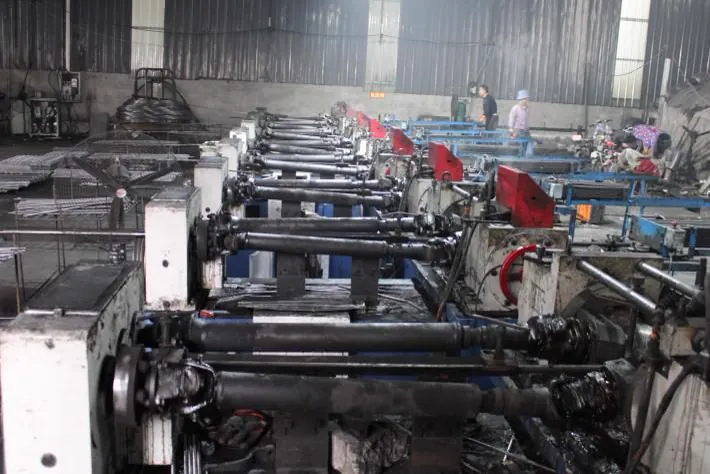
Our own production and test data are available on request — see how our factory works and contact the engineering team.
This is not an unusual situation in formwork procurement. Tie rods are among the few structural items on a site that arrive in bulk, get buried inside a closed wall, and are never inspected again. Nobody opens a completed formwork face to check whether the rod behind it was rolled from certified steel or cut from whatever was in the stock rack. The rod gets paid for once, at the moment a container is cleared, and the consequences arrive much later, if at all, in the form of a wall that leaks or a pour that has to be redone.
The good news is that the differences between a good tie rod and a bad one are physical and measurable. You do not need a laboratory to check any of them. You need to know the four marks to look for, and you need them written into the order before the goods are made rather than after they arrive.
Heat number is a series of numbers stamped on the rod that connects it back to a specific chemical analysis and mechanical test result. Thread formation refers to the method of creating the thread, either by rolling or cutting, which affects the fatigue life. Coating thickness means the measurement in microns of the protective layer on the tie rod, typically 45 microns or more for hot-dip galvanising. Batch records are lot-level traceability documents that can be retrieved by heat number, ensuring the quality and origin of the material.
What actually separates a high-quality tie rod from a cheap one
Strip away the marketing and a high-quality structural tie rod is defined by four things, each of which can be checked by a buyer or an inspector in under a minute. The order below is roughly the order in which the differences start to matter: material first, because it determines everything downstream; thread formation second, because it determines fatigue life; coating third, because it determines how long the rod survives a wet wall; and records fourth, because it determines whether you have any recourse when the first three turn out to be wrong.
| Mark | What to check | Evidence that satisfies it | Red flag |
|---|---|---|---|
| Material traceability | Heat number stamped on the rod, tied to a specific heat | EN 10204 3.1 mill certificate naming the same heat | Grade stamp only, no heat number |
| Thread formation | Flank surface and crest condition | Rolled thread, continuous spiral, no burr | Visible cut tool marks, stepped thread diameter |
| Coating | Thickness measured on the delivered lot | ISO 10683 hot-dip at 45 microns or more | Under 12 microns described as galvanised |
| Batch records | Lot-level traceability after delivery | Test report retrievable by heat number in days | Only a company certificate with a letterhead |
None of these marks is exotic. Every competent producer of structural tie rods has all four. The reason buyers end up with the wrong product is that they never asked for them in a form that could be checked.
Mark 1: material traceability, which is the only mark that cannot be faked later
Steel arrives at a factory as bar or coil from a mill, and it leaves as rod carrying a series of numbers that connect it back to a specific chemical analysis and a specific mechanical test result. Those numbers are the heat number, and they are what make a rod traceable.
A traceable tie rod carries its heat number on the rod itself, usually stamped on one end or on a tag attached to the bundle. The number is not decorative. When you request an EN 10204 3.1 certificate, that certificate names a heat, and if the heat on the certificate does not match the heat on the rods in your yard, you are holding a document about somebody else's steel.
This matters more than it sounds, because grade markings are cheap to reproduce. A stamp that says 45 or 8.8 can be applied to any steel. What cannot be reproduced is a certificate whose chemical analysis and tensile results correspond to a specific heat of steel that your supplier actually bought. Our guide to tie rod grade selection covers what the numbers on the certificate should show for the grades used in formwork, and why a certificate without a heat number is closer to a brochure than to a document.
The practical test is simple. Before you pay, pick three rods from three different bundles, read the heat numbers, and ask the supplier for the certificate for one of them. A supplier with real traceability answers in minutes, because the answer is in their filing system. A supplier without it changes the subject, and that answer is worth more than any price comparison you were going to do.
Mark 2: thread formation, which is where fatigue performance is actually won
The thread on a tie rod is not a cosmetic feature. Under a cyclic load, most of the stress concentrates at the root of the thread, and the way that root was formed determines how the steel behaves over thousands of load cycles.
Cold rolling forms the thread by pressing a flat die against the rod, displacing material sideways and compressing it. The surface layer of the rod is worked, not cut. The result is a thread with a smooth, slightly burnished flank, a continuous spiral mark running from the end of the rod to the thread run-out, and a root that is compressed rather than gouged out. Because the surface is work-hardened, it resists the initiation of a crack at exactly the point where a crack would otherwise begin.
Cutting or tapping the thread removes material with a tool. It is faster to set up, it is cheaper per metre, and the root of the thread is left in tension with torn structure. A cut thread will still pass a static load test. It will not give the same margin over the tens of thousands of cycles that a wall sees through seasonal movement, temperature change and the slow working of concrete.
The difference is visible without instruments. Turn the rod over and run a fingernail along the thread flank. A rolled thread feels continuous and slightly smooth, with no ridged tool marks. A cut thread shows a distinct, coarser spiral line running along the flank, and where the manufacturer reduced the thread diameter to ease cutting, there is a visible step at the transition. On a structural tie rod, that step is also a stress concentration, which is why tolerance specification matters so much more for these rods than for a general-purpose threaded bar.
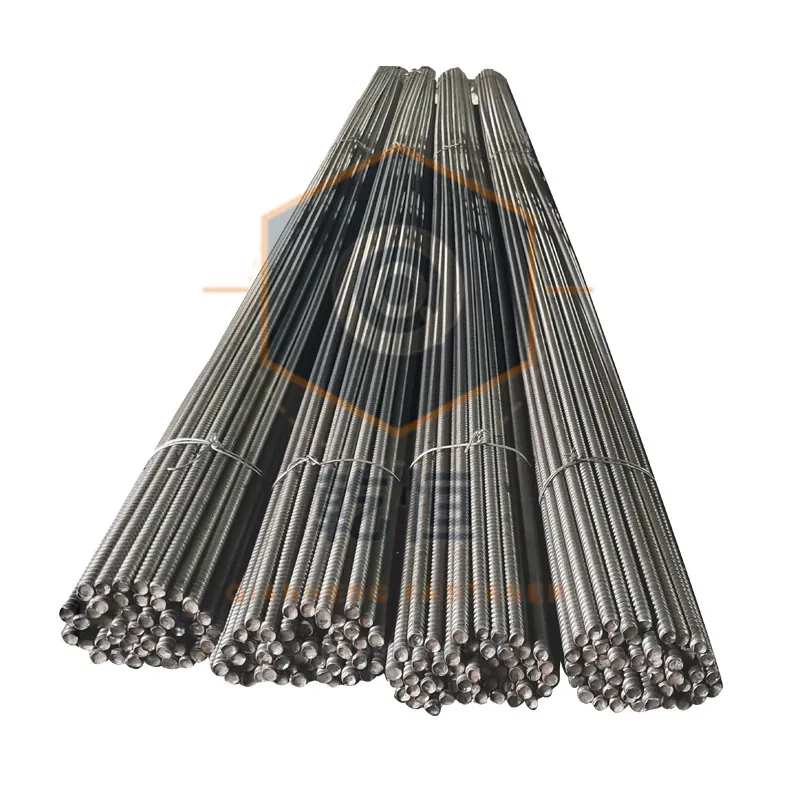
This is the single most useful physical check on a tie rod, and it costs nothing. It is also the check most often skipped, because it requires turning the rod over and looking, rather than reading a certificate. That is precisely why low-priced suppliers keep it.
Standard basis: ISO 965-1
Mark 3: coating, where the number of microns matters more than the name
Coating on a formwork tie rod does two jobs. It protects the steel during the wet, alkaline environment of a cast wall, and it protects the thread during handling, storage and the months between delivery and installation.
The specification is expressed in microns, and the names used in the market do not reliably predict the number. Electro-galvanised coating on a structural tie rod is typically between 5 and 12 microns: a thin, often slightly bluish film that looks convincing and disappears at the first sign of abrasion. Hot-dip galvanising under ISO 10683 puts on 45 microns or more, with a visibly thicker, duller and slightly spangled surface. There are legitimate reasons to choose either, but they are different products with different service lives, and a purchase order that says only galvanised leaves the choice to the supplier.
There is a further trap specific to high-strength grades. Electro-galvanising processes, and particularly acid pickling used to prepare the steel for coating, can introduce hydrogen into the steel. In a grade 8.8 or 10.9 rod, which is hardened and stress-sensitive, hydrogen embrittlement can produce a delayed failure that appears days after installation, with no visible defect at the time of installation. This is why the coating specification and the thread condition should be reviewed together rather than chosen independently, and why the safe working load calculation for a high-strength rod should use the design capacity of the assembly rather than the nominal capacity of the bar.
Coating thickness is measurable on site with a magnetic thickness gauge or, less precisely, by weighing a known length of rod before and after. A supplier who cannot state the coating thickness of the lot they are shipping is telling you something useful about the other three marks as well.
Standard basis: ISO 1461
Mark 4: batch records, which only become valuable when something goes wrong
The first three marks are things you can see. The fourth is the one that determines whether a claim is even possible.
A batch record ties a specific delivery to a specific set of test results: the heat, the coating thickness measurement, the dimensional sample, and any third-party inspection report. Its practical value is not during acceptance, when everything looks fine. Its value appears months later, when a wall in one part of a site behaves differently from the rest and you need to establish whether those rods came from a different heat or a different coating run.
A useful arrangement is straightforward to agree: the supplier retains batch records for three years and can retrieve the report for a stated lot within five working days of a claim. No format is required beyond that. In exchange for that commitment, a supplier should be able to send you, before shipment, the test report covering the heat numbers on the pallet.
Where the order value justifies it, a third-party inspection report adds a layer that neither party controls. Our guide to batch test reports and mill certificates covers what to ask for and how to read the certificate once it arrives, including the difference between a 2.1 certificate, which is a self-declaration, and a 3.1 certificate, which is independently verified by the mill.
Where the low price actually comes from
A supplier quoting forty percent below the market for D15 tie rods is not giving away efficiency. They are doing at least two of four things, and each of them is visible if you know to look.
Substituting the material. Certified grade steel costs more per tonne than unverified bar, and the saving applies to the whole order, not a small component. Once the rod is zinc plated, there is no visible difference between the two, which is what makes this the most common substitution and the hardest to detect after delivery.
Cutting instead of rolling the thread. Cutting removes material, saves machine time and eliminates the scrap generated by thread rolling. It is a genuine production saving and it is the reason some rods are thirty percent cheaper than others of the same appearance.
Reducing coating thickness. Cutting from 45 microns to 8 microns saves less per rod than most buyers expect, because zinc is a small part of the total cost. It is frequently done anyway because it is easy.
Dropping the records. This costs nothing in production, which is why it is dropped first when margins tighten. The consequence is borne by the buyer, later, alone.
There is no fifth option in which a price of this kind simply comes from doing the same work more cheaply, and a supplier who claims otherwise is describing a process they cannot show you. The practical test we recommend is the one described in our article on inspecting tie rods on delivery: check the thread formation on three rods, read the heat numbers on three bundles, measure the coating once, and ask for the certificate for one heat. Ten minutes of work separates a price from an excuse.
What ISO certification does and does not tell you
Certification is worth having, and it is worth understanding precisely, because it is frequently used in a way that obscures rather than reduces risk.
ISO 9001 certifies a quality management system. The auditor checks whether documented procedures exist and are followed: how incoming material is inspected, how thread gauges are controlled and calibrated, how coating thickness is measured, how non-conforming material is segregated. It is a statement about the process, issued to a company rather than to a part number, and it says nothing about the rods in a particular container.
Where it genuinely helps is in reducing how much you need to check yourself. A certified supplier has written procedures for the four marks above, so a sample inspection on arrival is a confirmation rather than an investigation. That is a real saving on large orders and a poor substitute for any check at all on small ones.
The documents that carry weight about the product are different: a mill certificate to EN 10204 3.1 for the specific heat number, a dimensional and coating report on a sample drawn from your lot, and where the value warrants it, a third-party report from SGS, Bureau Veritas or an equivalent. ISO 9001 tells you the supplier is probably capable of producing these. It does not tell you they produced them for your lot.
How to write the quality clauses so they can actually be checked
Quality language in a purchase order fails in one of two ways: it is so vague that any delivery conforms, or it is so demanding that no supplier will quote it. Four clauses, each tied to one of the marks above, avoid both.
Write material traceability as a document requirement rather than a material description: *"Rolled steel to grade 45 or equivalent. Mill certificate to EN 10204 3.1 supplied, traceable by heat number to the rods delivered in this lot."* The supplier now knows you will compare numbers, and can decide honestly whether to quote.
Write thread formation as a method, not just a size: *"M15x2.5 rolled thread, formed by cold rolling. Cut threads not acceptable."* This is a normal specification for a structural tie rod and it is the clause that removes the largest hidden cost.
Write coating as a measurement: *"Hot-dip galvanised to ISO 10683, minimum 45 microns, or zinc-nickel to an agreed minimum thickness. Coating thickness verified on a sample of the delivered lot and reported."* Name the standard and the number and the argument ends.
Write records as a retention commitment: *"Batch records retained for three years, retrievable within five working days of a quality claim."* This costs a supplier nothing who already keeps them and will be refused by a supplier who does not, which is the information you wanted.
None of these clauses is unusual, and a supplier who quotes against all four without a price increase is telling you something worth knowing. A supplier who raises the price by a large margin has told you the same thing in the other direction. Both answers are useful; silence is not.
The traps that catch buyers who only check the price
Three failure modes recur often enough to name. All three pass a casual visual inspection.
Mixed heats in one delivery. A supplier with good stock management consolidates partial heats from different mills into one shipment. Each rod is genuine, each rod carries its own heat number, and no single certificate covers the lot. The problem surfaces only when a claim requires you to prove which rods came from which heat. Specify in the order that one lot means one heat, or accept that you will be sampling a shipment that has no single identity.
Thread diameter reduced to suit the tooling. Some manufacturers machine the last portion of the rod below nominal thread diameter to make cutting faster and to reduce tool wear. The rod passes a thread gauge check at the end and fails at mid-span, and the site does not find out until the nut does not seat. This is a tolerance question with real consequences, and it is covered in more detail in the article on tie rod tolerance specification.
Coating described by name only. Electro-galvanised, galvanised, zinc plated, hot-dip galvanised and DACRO appear interchangeably in quotation documents and invoices. They are not interchangeable. A quotation that says only galvanised should be returned for clarification, and the clarification should be written into the order.
What this means for your next order
The purpose of the four marks is not to make every supplier expensive. It is to make the comparison between them meaningful. Two quotations against the same specification are only comparable if both suppliers are quoting the same material, the same thread formation, the same coating thickness and the same documentation. Without those four clauses, you are not comparing products, you are comparing the extent to which different suppliers decided to guess.
A tie rod is a structural element that will spend its working life inside a wall, holding concrete that will be under load for decades. The checks above take about ten minutes per delivery and they are the difference between knowing what is in your formwork and hoping. If you want to see how these four marks are implemented on a production line rather than described in a brochure, the thread rolling workshop article walks through the process, and our tie rod product page lists the grades, diameters and coatings we supply with the documentation attached.
References and standards.
- EN 10204:2004 — Types of inspection documents
- ISO 898-1 — Mechanical properties of fasteners made of carbon steel
- ISO 3501 — Corrosion resistance of stainless steel fasteners
- NIST material measurement standards
- ISO 2859-1 — Sampling procedures for inspection by attributes
- ISO 9001:2015 — Quality management systems
About us: This article covers the four marks to verify high-quality tie rods and what evidence to write into the purchase order. Our production and test data are available on request. Our contact page provides a way to reach our engineering team, and the about page documents how our factory works. This article was reviewed by the Qianheng Formwork Engineering team.