
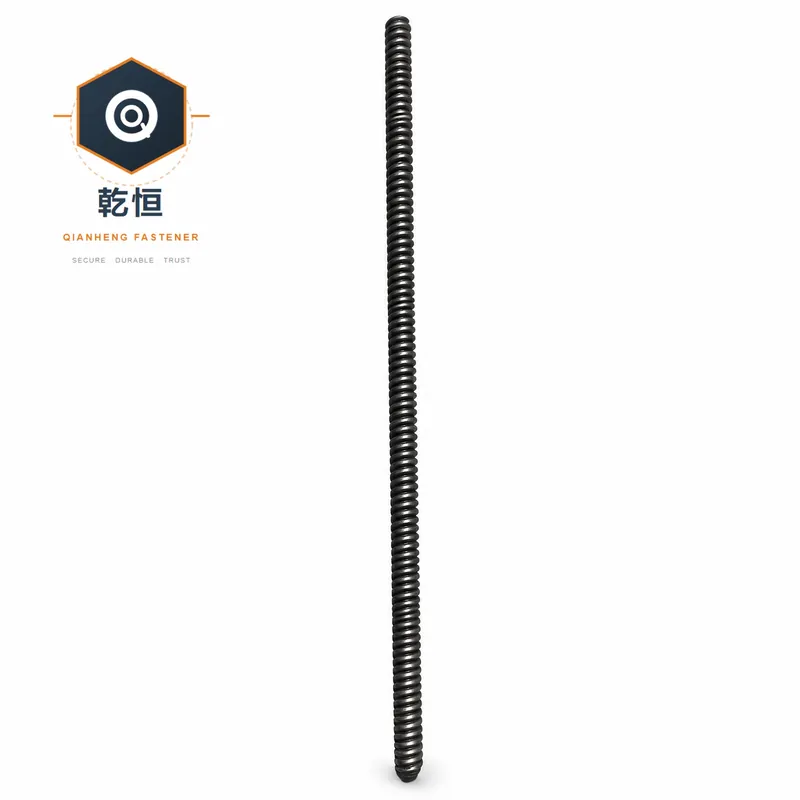
D12 Form Tie Rod
D12 all-thread rod, 0.74 kg/m, tested tensile 35–42 kN by material.
- D12 all-thread rod, 0.74 kg/m
- Tested tensile: A195 35 kN · 35K 42 kN (2026 catalogue)
- Length 200–8000mm, cut to length
D12, D15/17 and D20/22 high-strength tie rods plus precision rolled tie rod — tested tensile by material, coatings, cut to length 200–8000 mm.
The tie rod is the part that actually holds the formwork. This series covers the D12, D15/17 and D20/22 all-thread rods and the precision rolled tie rod, with tested tensile capacity by material, coating options and cut-to-length service. In D15/17, D15 is the rod size and 17 is the width across flats of the matching nut; the same rod is ordered in some markets as the 17/10 profile (17 mm outer thread × 10 mm pitch). D20/22 follows the same rule with a 22 mm nut.
D12 all-thread rod, 0.74 kg/m, tested tensile 35–42 kN by material.
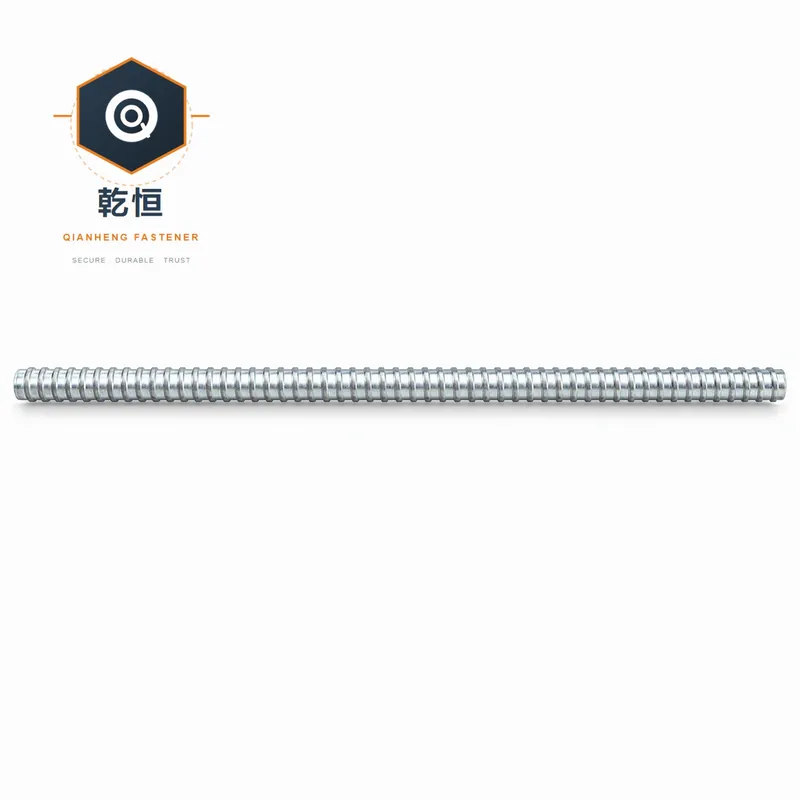
D15/17 all-thread rod (DW15, 17/10 profile), 1.47–1.50 kg/m, tested tensile 110–180 kN by material.
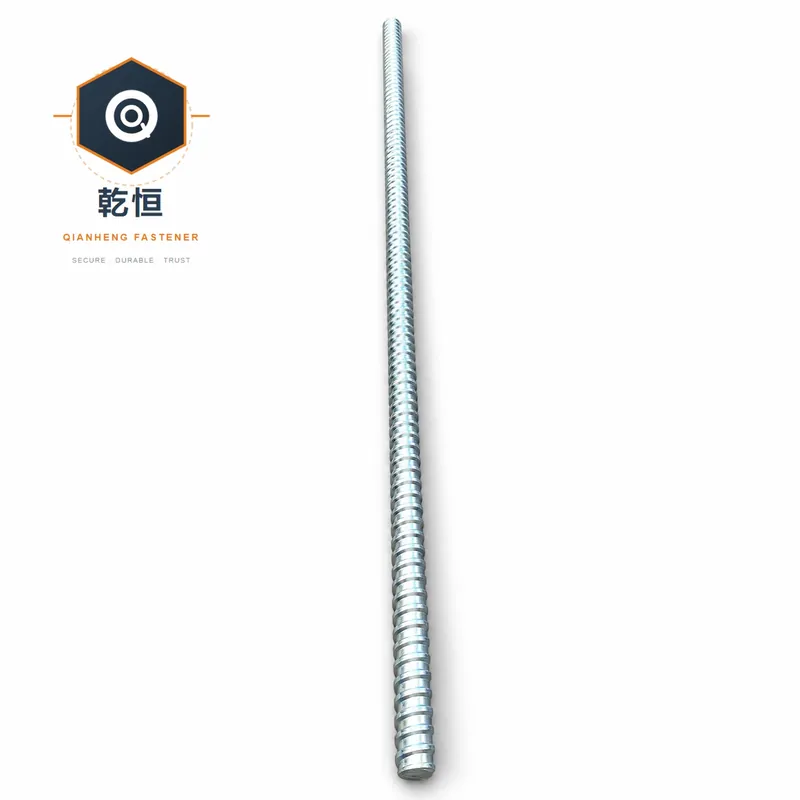
D20/22 all-thread rod, 2.60 kg/m, tested tensile 210–240 kN by material.
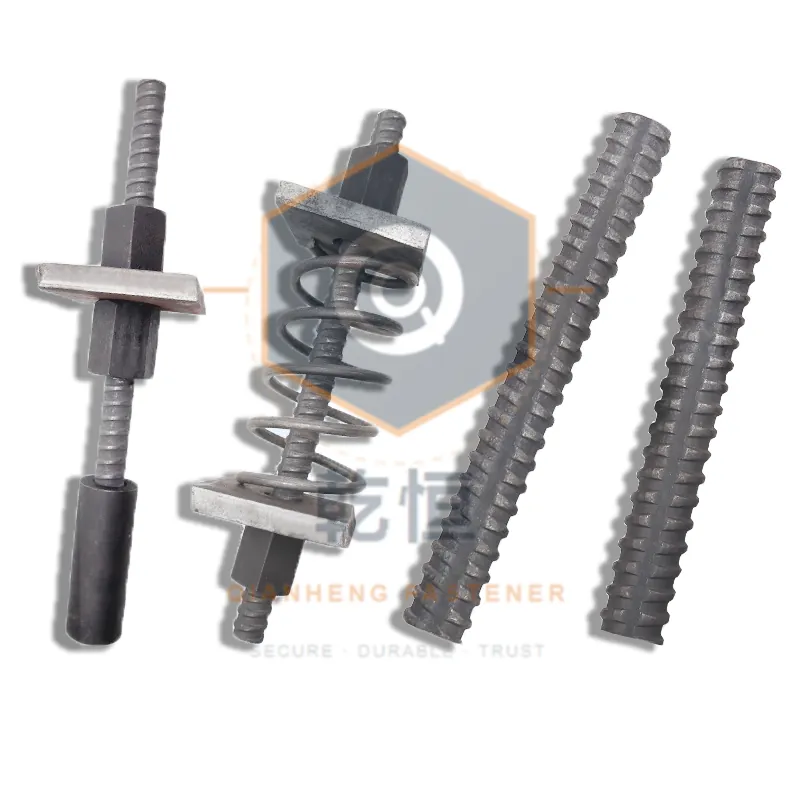
Precision rolled tie rod with continuous rolled thread, tested tensile up to 180 kN; cut to your length.
A tie rod is the member that actually resists the concrete pressure, so the choice follows the wall, not the catalogue. D12 (0.74 kg/m, tested tensile 35–42 kN) suits low-pressure walls, edge formwork and residential slabs. D15/17 (1.47–1.50 kg/m) is the volume choice for wall, column and slab formwork at normal pour heights. D20/22 (2.60 kg/m, tested tensile 210–240 kN by material) is specified where the pour rate, the height or the tie spacing pushes the load past what a 15 mm rod can hold — thick raft walls, bridge falsework, high single-lift pours.
Four values decide it: rod diameter, material grade, length and coating. Diameter comes from your engineer’s tie load; in D15/17 the "15" is the rod size and "17" is the width across flats of the matching nut, and the same rod is ordered in some markets as the 17/10 profile (17 mm outer thread × 10 mm pitch). Material sets the tested tensile: Q235 100–110 kN, 45# 120–140 kN, 40Cr 140–160 kN, precision-rolled 180 kN — all third-party tested tensile, not an allowable working load, so apply your own safety factor. Length is cut 200–8000 mm to your schedule. Coating follows exposure: plain for dry interior work, electro-galvanized for general site use, hot-dip galvanized 45–85 µm or Dacromet for outdoor, coastal or repeated-use formwork. Threads are rolled to DIN 976, A193 B7 or GB/T 15389, and we supply the matching cones, sleeves and nuts on the same order so the thread pair is never mismatched.
Around 300 tonnes of standard sizes sit in stock at Yongnian, so plain and galvanized D15/17 and D20/22 in common lengths ship in about three days. Cut-to-length and non-standard thread or coating runs take 7–15 days. Mill certificates to EN 10204 3.1 are issued on request and are worth specifying for structural pours. Rods are bundled and strapped for container loading, with export packing to your instruction; mixed orders with nuts, cones and plates are consolidated into one shipment so site receives a complete tie set rather than a partial one.
If your formwork design already specifies a rod diameter, start with the D15/D20 high-strength rods and their tensile data; if the wall must be watertight, a water-stop tie with a welded plate replaces a plain through-tie without changing the tie spacing. For a side-by-side of the two diameters, see our D15 vs D20 tie rod comparison. D15 vs D20 tie rod comparison
D15 and D20 are nominal bar diameters. At the same property class the tensile capacity scales with the cross-sectional area, so D20 carries roughly 1.7 to 1.8 times the load of D15. D15 suits residential slabs and light walls; D20 is used for thicker walls, faster pour rates and higher hydrostatic pressure. The choice is always confirmed against the formwork pressure calculation for the actual pour height and rate, not copied from a previous job.