
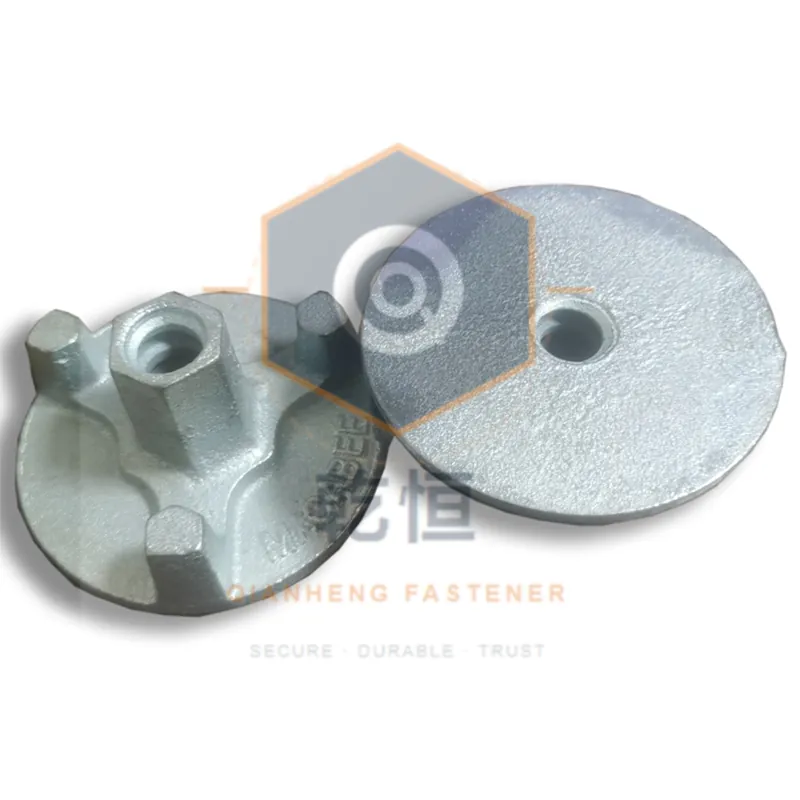
Disc Nut
Wing / disc nuts for tie rod ends, DIN-thread matched, high tensile.
- D12 / D15 / D20 tie rods
- ~180 kN rated bearing
- Flat machined face
Disc nuts, double-lug disc nuts, wing (mountain) nuts, water stop nuts, combination and connecting nuts — thread matching and pairing guidance.
The nut is where the tie load is actually held. This series covers the disc nuts that spread concrete pressure, the wing nuts that tighten by hand, the water stop nut for watertight walls, and the combination and connecting nuts used to build or couple a tie. Match thread and pitch to the rod before ordering.
Wing / disc nuts for tie rod ends, DIN-thread matched, high tensile.
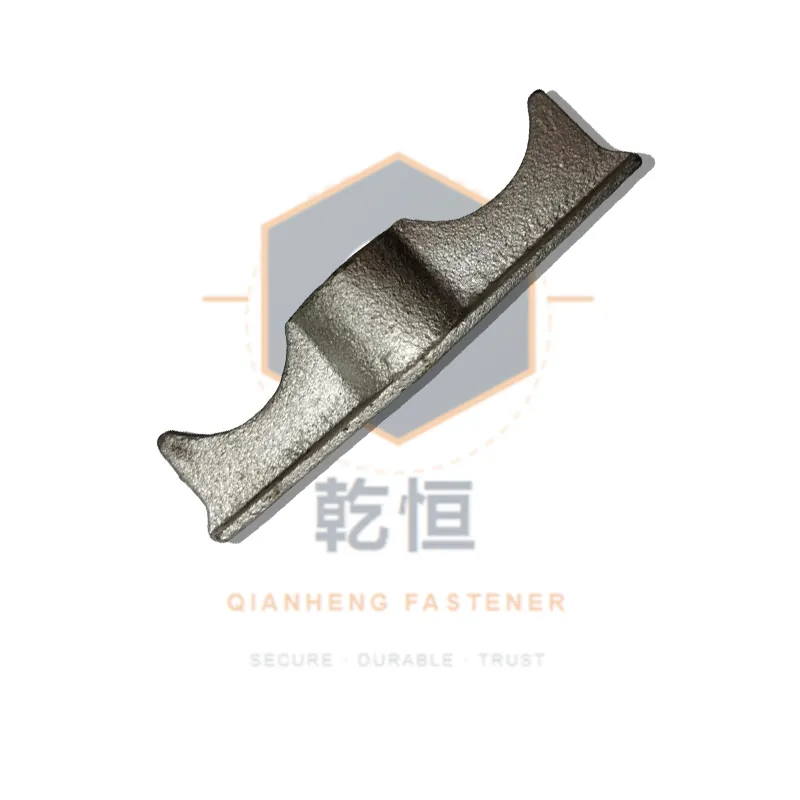
Wing-type mountain nut for hand-tight fastening of formwork ties.
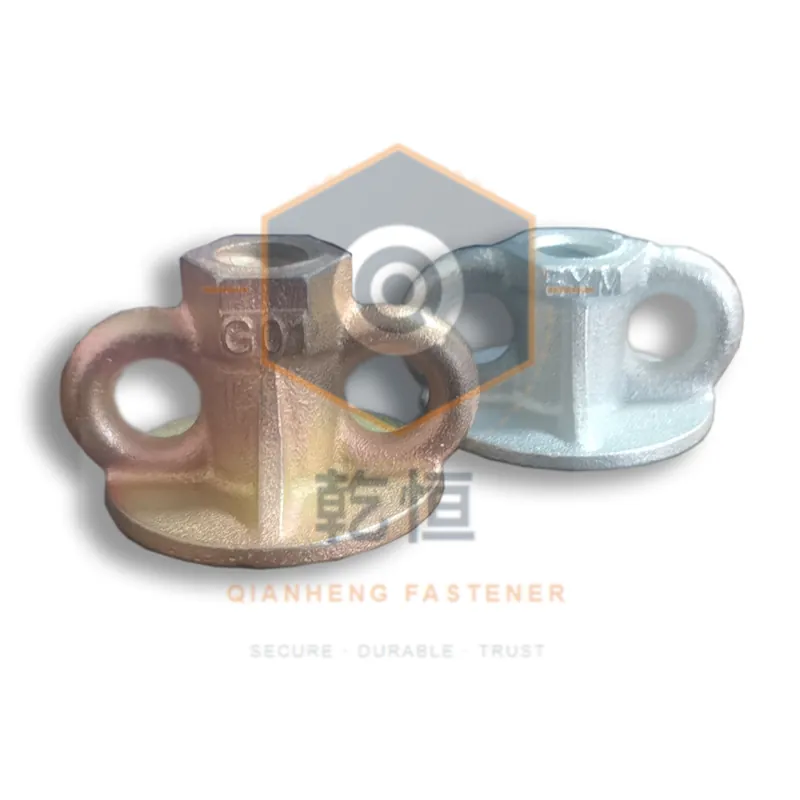
Two-lug disc nut for hand tightening and fast tie rod assembly.
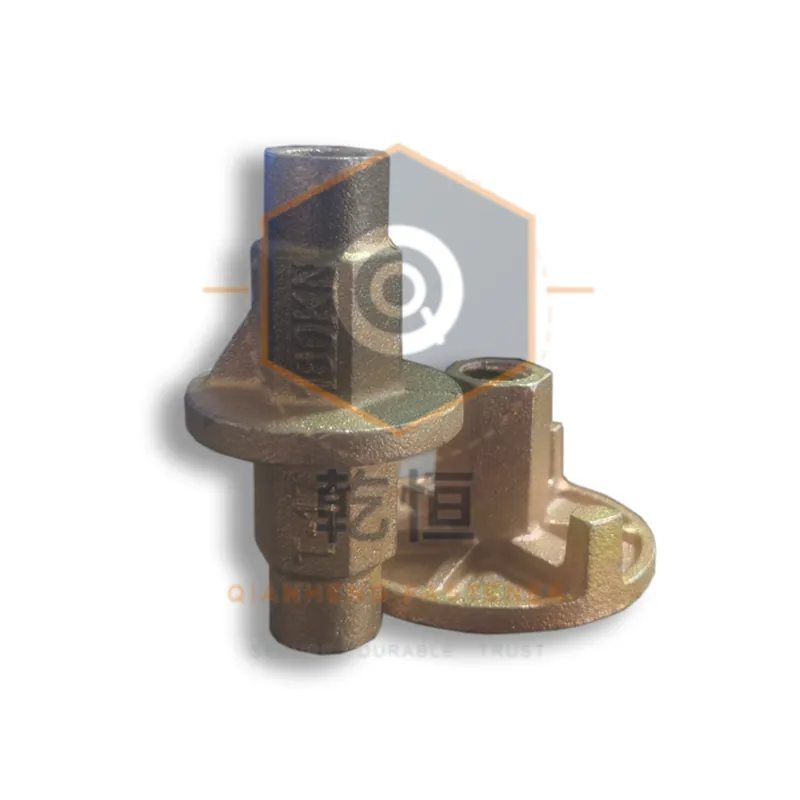
Cast iron nut with water stop for watertight tie rod systems.
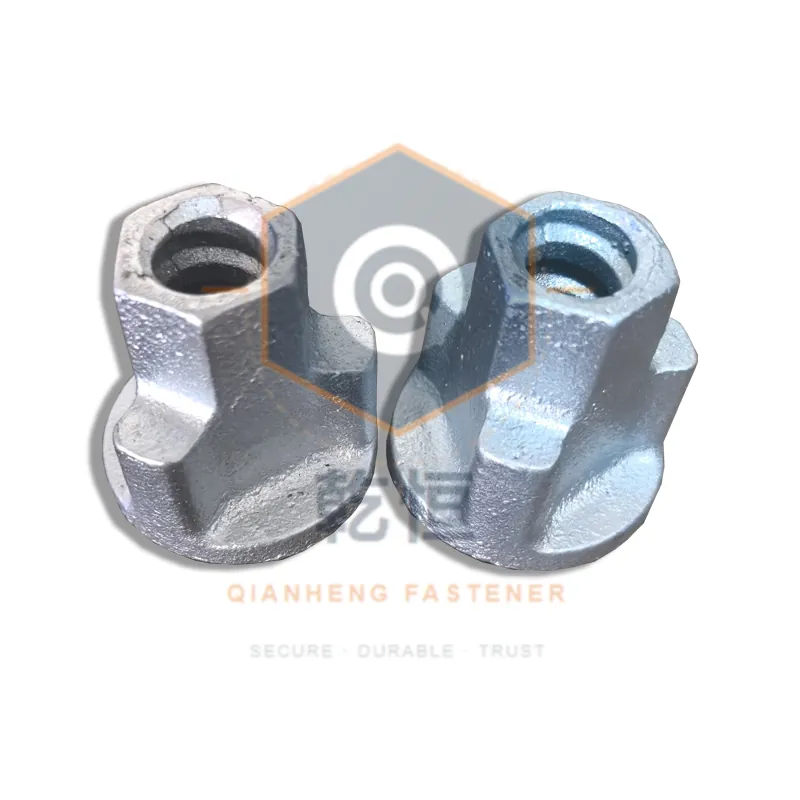
Pressed mountain-type disc for spreading tie rod load on walers and panels.
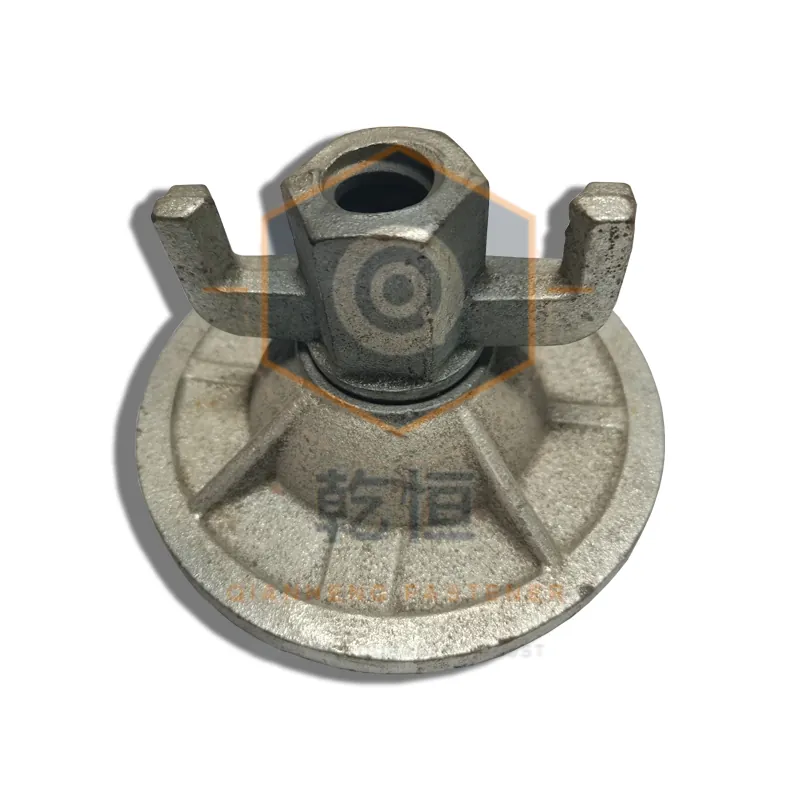
Butterfly nut combined with disc for one-piece tie rod fastening.
The nut is where the tie load is actually held, and the type follows the face it bears on. Disc nuts spread the load across a flat machined face and are the default on wall and slab formwork; the double-lug version adds hand leverage for tight joints; wing and mountain nuts tighten by hand without a spanner on high-turnover panels; the combination nut fuses nut and disc into one part to cut the number of pieces a crew handles; connecting nuts join two rod sections for deep walls or long runs; and the cast-iron water stop nut sits inside a water-retaining wall so the tie hole cannot become a seepage path.
Thread mismatch is the most common ordering error, so match before anything else: a D15/17 rod takes a 17 mm across-flats nut on a 15 mm rod thread, and a D20/22 rod takes a 22 mm nut. Disc nuts carry roughly 180 kN rated bearing on a flat face and pair with a square base plate where the concrete surface is uneven or the timber is soft. For watertight walls the water stop nut replaces the standard nut without changing tie spacing, and the tie is cut back after stripping. In high-vibration or repeatedly re-used systems a plum washer behind the nut resists loosening. All nuts are QT450-10 ductile iron or forged steel, and we supply them with the rods so the pairing is verified before dispatch.
Nuts and rods are quoted as a set: buyers who order rods first and nuts later routinely end up with a thread mismatch from a different supplier. Standard D15/17 and D20/22 nuts are held in stock and ship in about three days; cast or forged specials and non-standard plate sizes take 7–15 days. Ductile iron parts are packed in bags then on pallets to keep threads clean in transit, with ton-bag or carton options for mixed container loads. Certification to ISO 9001:2015 covers each batch, and dimensional reports are available for incoming inspection.
A formwork tie rod is a high-strength threaded bar that, together with nuts, anchor plates and walers, holds formwork panels against the lateral pressure of fresh concrete. It passes through the wall section and is either fully recovered after stripping (through-tie used with a sleeve) or permanently embedded (lost-end / water-stop type).