
Cones are usually bought on unit price, because that is the number that appears on a quotation. It is also the least useful number in the decision. A cone that costs a fifth as much but lasts a tenth as long, and needs its thread replaced twice, is the more expensive item. Cost per use is the figure that matters and it depends on four inputs, only one of which is on the price list.
What the cone actually does
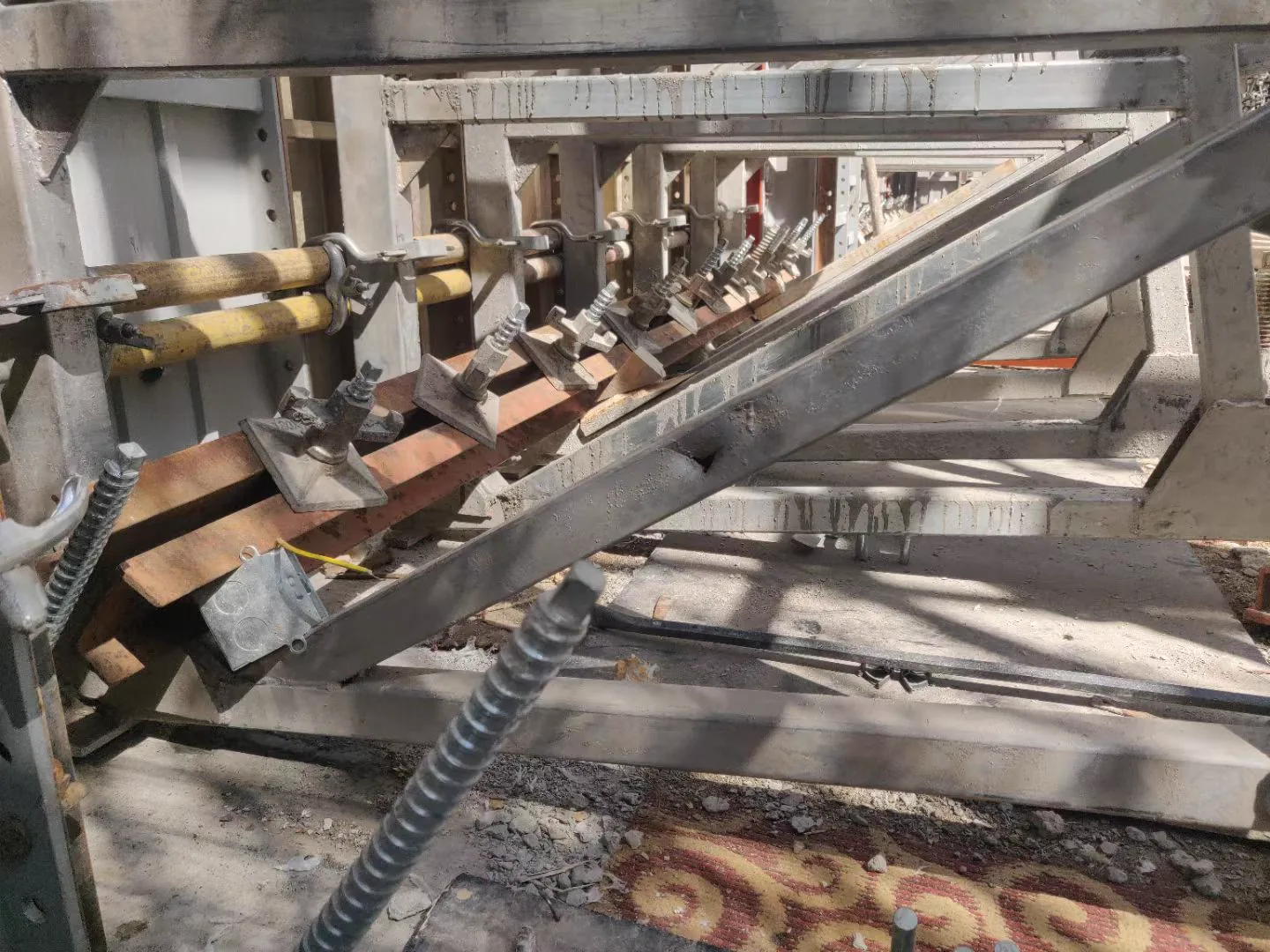
The cone forms the conical recess at the concrete face, protects the tie thread during the pour, holds the washer plate in position against the waler and provides the void that will later be grouted. Three functions, one small part, which is why failures show up as several unrelated-looking site problems: leaking around the tie, spalling at the face, and rods that will not release cleanly.
Plastic and steel compared
The two materials are not interchangeable, they suit different duty cycles. Plastics are moulded, light and release well; steel is durable, indifferent to weather and survives abuse that would destroy a polymer part.
| Characteristic | Plastic cone | Steel cone |
|---|---|---|
| Unit price | Low | Several times higher |
| Weight | Light | Heavy |
| Typical reuse cycles | Tens | Hundreds |
| Cold weather | Becomes brittle | Unaffected |
| Extreme heat | Softens and deforms | Unaffected |
| Concrete adhesion | Releases easily | Needs cleaning |
| Loss and theft risk | Lower, low scrap value | Higher, recoverable scrap value |
| Best fit | Short projects, mild climate, low turnover | Rental fleets, long-term high turnover |
The arithmetic that decides it
Cost per use has three terms, and only the first is visible before the order.
| Term | Plastic cone | Steel cone |
|---|---|---|
| Purchase price divided by lifetime cycles | Low price, low cycle count | High price, high cycle count |
| Cleaning labour per cycle | Low | Higher, concrete must be removed |
| Replacement driven by loss and damage | Small unit loss, cheap to replace | Larger unit loss, expensive to replace |
Substitute your own figures into those three rows and the answer is usually not close. On a single project with a few hundred cones and one or two pour cycles, plastic wins because the lifetime cycle count never gets exercised. In a rental fleet that reuses the same cone dozens of times a year for a decade, steel wins because the purchase price is amortised over hundreds of uses and cleaning becomes the dominant running cost.
Where reuse counts come from
Published cycle figures are measured under favourable conditions. What a site actually achieves depends on factors that rarely appear in the datasheet:
- Striking time, because cones pulled early from green concrete come out clean, and cones left for days bond to it.
- Cleaning method, because a hammer and a chisel shorten a steel cone's life faster than the cone itself wears.
- Storage, because cones tipped into a wet stillage or left in the sun age faster than those returned to a rack.
- Concrete grade, since higher strength mixes grip the cone harder at every cycle.
- Loss rate, which in practice is the single largest term and the one nobody records.
Failure modes that end a cone's life
- Thread flattened or rounded, so the tie no longer pulls the cone squarely against the form face.
- Outer diameter grown or deformed, producing a recess that is oversized or out of round and needs more grout.
- Cracks in the body, most often after cold-weather handling.
- Concrete bonded into the cone seat, which is a cleaning problem on steel and a write-off on plastic.
- Stripped cone nut threads, which is the failure that most often appears on site as a tie that will not release.
Choosing for a given project
Two numbers make the decision: expected total cycles per cone and the loss rate your site actually experiences. Measure the second one for a month before committing to a large order, because a lost cone costs its full purchase price and no lifetime cycle count can offset it. If the product is going to a rental company, buy for cycles and specify steel with a defined thread tolerance. If it is going to a single project in a temperate climate, the cheap cone used once is not a compromise, it is the correct engineering choice, and paying more for durability that will never be consumed is simply a cost with no return.