
The Gulf does not stress formwork hardware in the way cold climates do. There is no embrittlement, no frost on the threads and no frozen release agent. The difficulties are different and mostly arrive before the pour: a faster-setting mix, a longer corrosion exposure and a working environment that punishes handling.
What high temperature does to the pour
Warm concrete hydrates faster, so workability is lost sooner. The practical consequences are familiar to anyone who has poured in August: placing windows shorten, vibration becomes harder to judge by eye, and the temptation to add water on site returns. Added water raises the effective water-cement ratio, which lowers early strength, which in turn makes the striking decision harder rather than easier.
The counter-intuitive part: pressure goes down
A faster-stiffening mix develops its hydrostatic pressure over a shorter column, so lateral pressure is generally lower in hot weather than in cold. On paper that permits wider tie spacing for the same formwork. Two effects usually erase the gain. The first is that crews work faster to avoid the hottest hours, and pour rate is the single strongest driver of lateral pressure. The second is that a mix retempered on site behaves differently from the one in the design calculation. Treat the reduction as a bonus if the calculations confirm it, not as a planning assumption.

Corrosion is the real threat, not temperature
On the coast, chloride from airborne salt is what attacks the hardware, and it attacks it whether the weather is hot or not. That makes coating selection the decisive specification. Distance from the sea, expected storage duration and the number of reuse cycles all point to the same answer: protection has to survive months of outdoor storage in a chloride environment, not just the pour itself.
| Coating | Typical thickness | Sensible use |
|---|---|---|
| Electroplated zinc | 8 to 25 microns | Inland sites, short storage, parts returned to store quickly |
| Hot dip galvanized | 45 to 85 microns | Coastal sites, long outdoor storage, repeated reuse |
| Stainless | Base metal | Swimming pool, desalination and genuinely aggressive exposure |
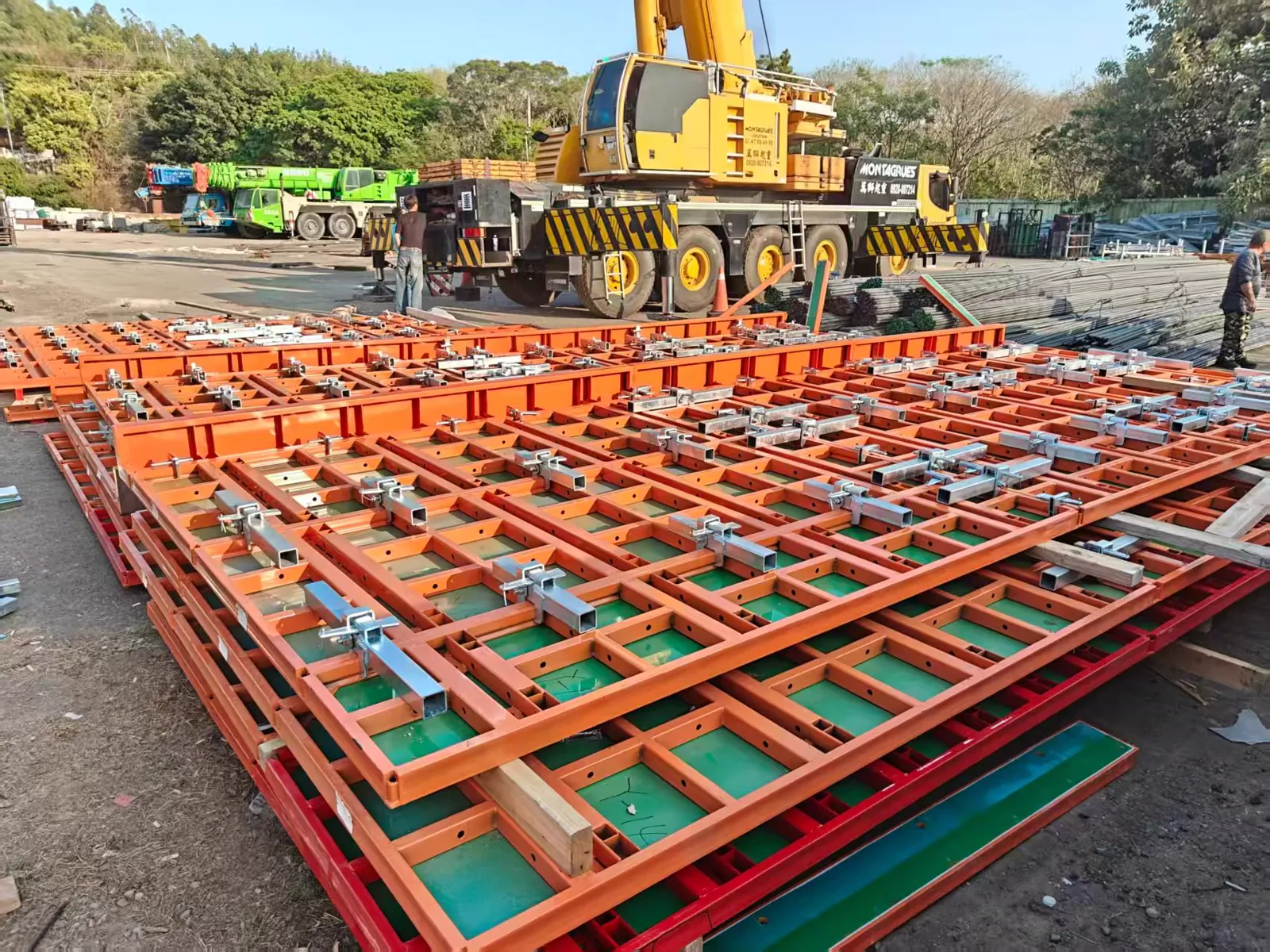
Handling and storage in 45 degree heat
- Dark steel left in direct sun can reach temperatures that burn through a glove; arrange shade for the stock rack, not just for the workers.
- Condensation forms when parts are moved from an air-conditioned store into humid outdoor air, so let them equalise temperature before unpacking.
- Blowing sand and dust contaminate threads and grease, and a contaminated thread gives a false torque reading during tightening.
- Coatings soften as they warm, so dragging pallets across each other removes the layer that the specification is paying for.
- Release agent applied in the heat and left to stand can dry before the pour, which then transfers to the concrete face.
What to specify for a Gulf project
State the site distance from the sea and the expected storage period, not just the product. A supplier who knows the goods will sit outdoors for six months in a coastal yard will propose a different coating and packing from one told only the quantity and the rod diameter. Add the pour rate and the concrete temperature at placement so that tie spacing is checked against the real duty, and require the coating thickness to be reported as a measured range with the test method named. On a Gulf project those two sentences prevent more failures than any discussion of price.