
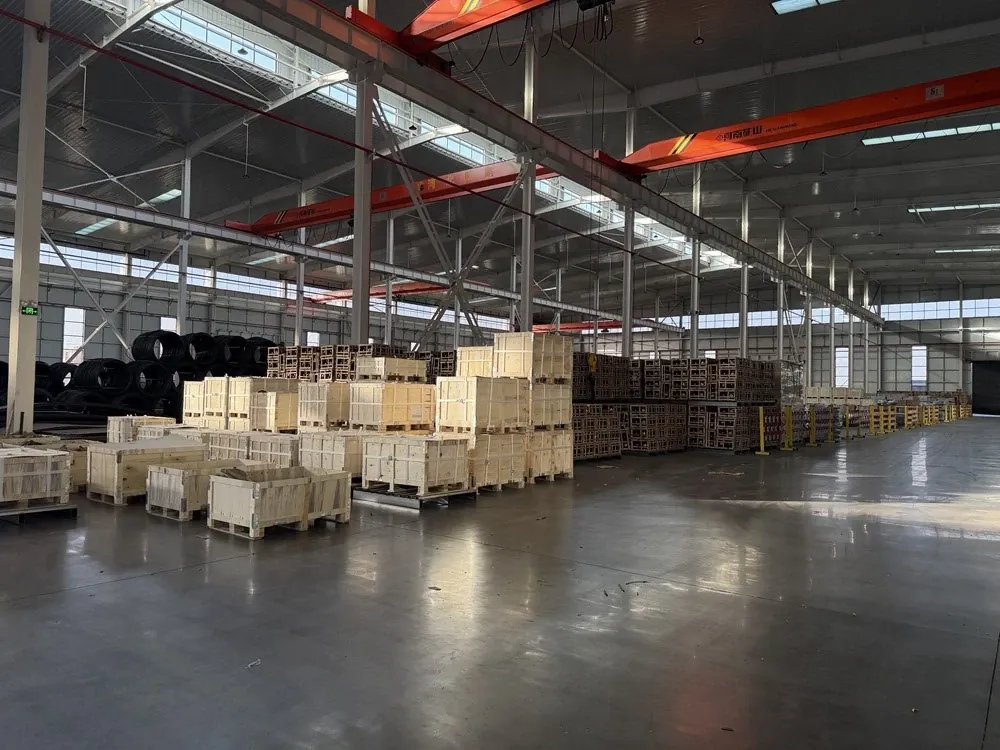
Fastener shipments that arrive rusty are rarely a coating failure. They are a packing failure driven by temperature cycling, humidity and contact between dissimilar materials over four to six weeks at sea.
Three mechanisms
CONDENSATION CYCLING: a steel container crossing climates can swing from below 0 °C to above 40 °C. Moisture in the air condenses on cold metal, evaporates, then condenses again. Even a well-coated part rusts at a damaged spot under repeated wetting.
GALVANIC CONTACT: bare steel banding on a galvanized or plated part creates a couple. The banding corrodes, stains the parts, and if tight, abrades coating at the contact point.
MECHANICAL ABRASION: threaded parts rubbing against each other or a pallet edge remove coating and expose fresh steel.
Packing layers that work
- Dry and clean before packing. Parts washed and packed wet will rust regardless of later wrapping.
- VCI (vapour corrosion inhibitor) film or paper in contact with the parts, or a VCI emitter in a sealed unit. VCI works only in a closed volume — wrapping a pallet and leaving the top open defeats it.
- Waterproof outer wrap sealed top and bottom. A single tear at a pallet corner gives condensation a path in.
- Pallet and strapping: steel strapping must be insulated from coated parts by edge protectors or plastic banding. Strapping over painted or plated parts marks them.
- Desiccant in the container, sized to volume and voyage, with vents taped shut where the shipping line agrees.
- Marking per package: item, quantity, drawing or BOM reference, and project phase if the shipment is staged. Unmarked cartons are how a crew ends up sorting 12,000 parts by eye.
Container loading
Load heavy pallets low and against the walls, fill voids so nothing shifts, and photograph the loading with door and pallet markings visible. Loading photographs are the cheapest insurance in the trade: they prove what shipped, in what condition, on what date. Ask for them before departure, not after arrival — after arrival the argument is about who caused the damage.
Documents that travel with the packing
A packing list mapping each package to its contents and, for kits, to the drawing or panel it belongs to. If material is packed per BOM line, say so on the list; the buyer can then check completeness before the container leaves.
Inspection on arrival
Open one unit per shipment in a sheltered area, not in the rain. Check the VCI film for condensation, the wrap for tears, and the parts for white rust (early) versus red rust (advanced). White rust on galvanized parts is usually cosmetic but signals that moisture got in; red rust is a claim.
For long-term storage keep the wrap closed and store under cover. Once the VCI barrier is opened the protection window starts closing — counted in weeks, not months.