Formwork Fasteners for the EU: CE / CPR Compliance and the Document Pack Buyers Need
At a glance: CE marking for formwork fasteners is not a stamp, it is a documented performance claim under the EU Construction Products Regulation. Confirm the applicable harmonised standard, require a Declaration of Performance with traceable batch data, and check factory production control before the goods reach the port. Placing a product on the EU market without the correct DoP exposes the importer and the distributor to withdrawal, so the paperwork is part of the load path, not an afterthought — see the EU Construction Products Regulation overview for the legal frame.
Formwork fasteners hold fluid concrete in shape, and the same parts that carry the load on a Russian or Middle Eastern site also reach EU projects — but the conformity route changes at the border. This guide walks through the CPR route, the standards that apply, the document pack a supplier must hand over, and how to write an RFQ a supplier can actually confirm.
Declaration of Performance (DoP) is the manufacturer's stated performance of a construction product against the essential characteristics in the applicable harmonised standard; it is the document a buyer checks against the project specification. CE marking is the visual claim that the DoP exists and the product conforms to it. Factory production control is the documented, repeatable process that ensures every batch of products meets the declared performance, assessed by a notified body where required. Harmonised standard refers to the European standard that defines essential characteristics and test methods for a specific type of construction product. Notified body is an organisation designated by an EU member state to assess conformity, particularly for factory production control and issuing certificates.
1. Why the EU route is separate from EAC.
The Eurasian Economic Union and the European Union run two independent conformity systems. A certificate that satisfies EAC or GOST-R for Russia does not, by itself, let the same box of tie rods onto an EU site. The EU single-market construction framework is built on the Construction Products Regulation (CPR, Regulation 305/2011), which requires a Declaration of Performance and CE marking where a harmonised standard applies.
That separation matters for the buyer because the responsible party shifts. Under the CPR the manufacturer issues the DoP; the importer and distributor must verify it is present and correct before placing the product on the market. Our EAC and GOST-R article covers the Russian side; this one stays on the EU side.
2. The legal frame: CPR, EN 1090 and the DoP.
Declaration of Performance (DoP) is the manufacturer's stated performance of a construction product against the essential characteristics in the applicable harmonised standard; it is the document a buyer checks against the project specification. CE marking is the visual claim that the DoP exists and the product conforms to it.
For welded and load-bearing steel components the relevant frame is often EN 1090, the execution standard for steel structures, which sits alongside the product's own harmonised standard. Where EN 1090 applies, the manufacturer needs a factory production control system assessed by a notified body, and the DoP references that assessment. A non-welded threaded rod may fall under a different, lighter route, so the first step is always to confirm which standard covers the specific part.
| Layer | What it is | Who signs it |
|---|---|---|
| Construction Products Regulation | The EU law requiring a DoP for covered products | EU Regulation 305/2011 |
| Harmonised standard (e.g. EN 1090) | Defines essential characteristics and test methods | CEN / notified bodies |
| Declaration of Performance | The manufacturer's stated performance | Manufacturer |
| Factory production control | The documented process that makes the DoP true | Manufacturer, assessed by notified body |
Standard basis: EU construction products
3. What a formwork fastener must declare.
The declared characteristics are the figures a buyer compares against the job. For a tie rod or water-stop system the usual set is mechanical grade, yield and proof load, coating and corrosion class, and dimensional tolerances.
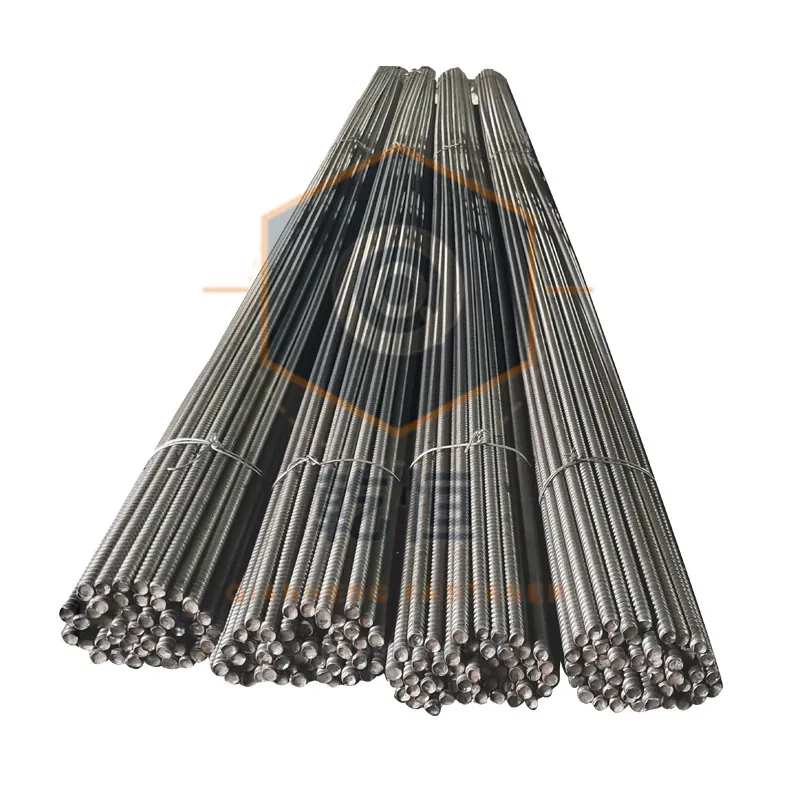
Steel grade sets the ceiling. Structural grades Q235 and Q345 cover most rods and nuts; 45# steel, quenched and tempered, is used where higher strength in a smaller diameter is needed. Cast parts such as wing nuts and climbing cones are normally ductile iron QT450, which gives a predictable breaking load rather than a brittle failure. Our team tensile-tests every finished part and measures the actual proof and breaking load, then issues a material certificate to EN 10204:2004 3.1 per batch — the same calibration discipline described by NIST's material measurement standards.
| Surface treatment | Protection level | Typical EU use |
|---|---|---|
| Hot-dip galvanizing | High, for outdoor and humid sites | Marine, tropical, long storage |
| Dacromet / zinc-flake | Very high, thin and thread-friendly | Pre-assembled nuts and cones |
| Black oxide | Low, cosmetic only | Indoor or short-life temporary works |
As an indication from our own datasheets, a D15 system is commonly rated near 150 kN in yield terms and a D20 near 230 kN. Those are yield figures; divide by the project safety factor, commonly 2 to 3, before comparing with the calculated load per tie. The cast-iron water-stop nut we produce in QT450 is rated to a documented breaking load and supplied with the test result.
4. The document pack a supplier must hand over.
A CE-compliant delivery is only as good as the paper behind it. Before the goods leave the port, require the pack that lets the importer confirm the DoP:
- A Declaration of Performance identifying the product, intended use, the harmonised standard, declared performance, and the manufacturer.
- A material certificate to EN 10204:2004 3.1 with batch-traceable tensile and proof-load data.
- Coating specification stating the process and the corrosion class achieved.
- An ISO 9001:2015 certificate as evidence of the quality system.
- Where EN 1090 applies, the factory production control assessment from the notified body.
The technical file the manufacturer controls is the part that removes delay in every route. Our three-part water-stop tie rod page carries the product-level data the DoP draws on, and the square base plate and climbing cone assembly must be covered on the same basis because the cone or plate often governs before the rod does.
5. Notified body and factory production control.
A notified body is an organisation designated by an EU member state to assess conformity; for welded load-bearing parts it assesses the manufacturer's factory production control. The assessment is what makes the DoP defensible, and a buyer should be able to see the body's identification on the documentation.
Factory production control is the documented, repeatable process that turns "this sample passed" into "every batch passes". It is the difference between a one-off test report and a conformity claim a notified body will stand behind. For coating, the FPC covers bath chemistry and thickness checks; for the rod, it covers grade verification and tensile sampling per batch.
6. Procurement practice for EU buyers.
State the four real inputs in the RFQ: intended use, the standard you expect, the coating and grade, and the batch traceability you require. With those, the supplier confirms the DoP and the test backing rather than a catalogue claim.
We hold about 300 t of fasteners in stock and dispatch stock items within 3 days; custom diameters, lengths and coatings run 7 to 15 days. Every finished part is tensile-tested against its specification and the result travels with the batch. Trade terms are EXW, FOB, CIF or DDP depending on who controls the freight, and export packing uses VCI paper and strapped crates to prevent rust in transit. Each specification is reviewed by our quality engineer before release.
Consider a first order into the EU: agreeing the applicable standard, the DoP format and the FPC evidence with our engineering team before production starts avoids the rework that arrives when conformity is left to the last week.
Standard basis: EN 10204
FAQ.
Is CE marking mandatory for every formwork fastener sold into the EU?
It depends on whether the product is covered by a harmonised European standard. Where a harmonised standard such as EN 1090 applies, a Declaration of Performance and CE marking are required before the product can be placed on the EU market. General hardware outside that scope follows a different route, so the first step is to confirm which standard, if any, covers the specific part.
What must the Declaration of Performance state?
The DoP must identify the product, the intended use, the harmonised standard applied, the declared performance of the essential characteristics, and the manufacturer. It is the document a buyer checks against the project specification, and it must be issued under the manufacturer's responsibility with traceable batch data behind it.
What should the RFQ state so a supplier can confirm CE compliance?
State the intended use, the standard you expect (for example EN 1090 where it applies), the coating and grade, and the batch traceability you require. With those, the supplier confirms the DoP and the test backing rather than a catalogue claim, and any gap between the part and the standard is caught before production.
---
About the author — Qianheng's formwork engineering team designs and tensile-tests tie-rod systems for contractors across the EAEU, the EU, the Middle East and Southeast Asia. *Reviewed by our quality engineer before release.*
About us: This article covers CE marking and the EU Construction Products Regulation for formwork fasteners, checked against current EU standards and regulations. Our team has extensive experience in ensuring compliance with EU requirements. Our contact page provides a direct line to our engineering team for specific inquiries, and the about page documents our company's capabilities and history. This article was reviewed by the Qianheng Formwork Engineering team.