
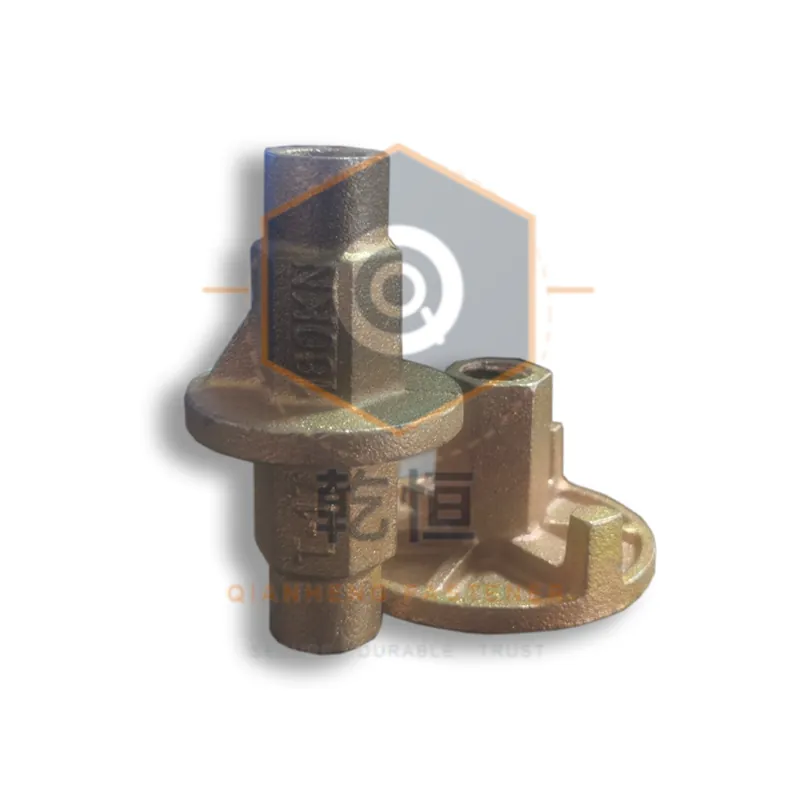
Damaged threads on a tie rod are common and often treated as a minor inconvenience to be dressed with a file. Some repairs are legitimate; others remove the section that carries the load, and the part fails later without warning.
Damage types
DEFORMED CREST from a hammer blow or a dropped panel: the crest is bent over but the root and flank are intact. Usually repairable by careful dressing, provided the thread still gauges.
BURR from cross-threading or forcing a nut: a raised lip of material, often with a torn flank underneath. The tear matters more than the burr.
GALLED THREAD from a seized nut, most common on stainless and on hot-dip galvanized assemblies: material has been welded from one surface to the other and then torn away. This removes flank material and is generally not repairable.
STRETCHED OR NECKED SECTION where the rod has been overloaded: the diameter is measurably reduced over a length. This is a scrap condition regardless of thread appearance, because the yield has been consumed.
Acceptable field repair
A thread file or a proper thread-restoring die, used to remove a burr or to restore a deformed crest without removing flank material below the gauge line. The test is simple: after dressing, a go gauge passes by hand and a no-go gauge does not enter more than two turns, and a nut runs down the full length by hand.
Dressing is a repair of geometry, not of strength. If any flank material was removed, the local section is reduced and the part should be derated or retired for load-critical positions.
Never acceptable
Welding a damaged thread or a broken rod. Welding destroys the heat treatment locally, introduces a brittle zone and leaves no traceable capacity.
Re-cutting a rolled thread with a die to a smaller size to accept a smaller nut.
Straightening a bent rod and returning it to general stock.
Using a rod with visible necking, corrosion pitting deeper than the thread depth, or a crack at the first engaged thread root.
The inspection rule that works
Before each reuse cycle, run a nut down the full thread length by hand and gauge the first three engaged threads. Segregate any rod that fails into a clearly marked rejection container — not back into the bundle. The failure mode of a mixed bundle is that the bad rod reaches the pour, and it always reaches the most loaded position.
Records
Track rejection rate per cycle. A rising rate indicates a handling or storage problem: rods stacked with concrete residue on threads, thrown into a stillage, or cleaned with a wire brush that removes more than it should. Fixing handling usually costs less than the rods being scrapped.