
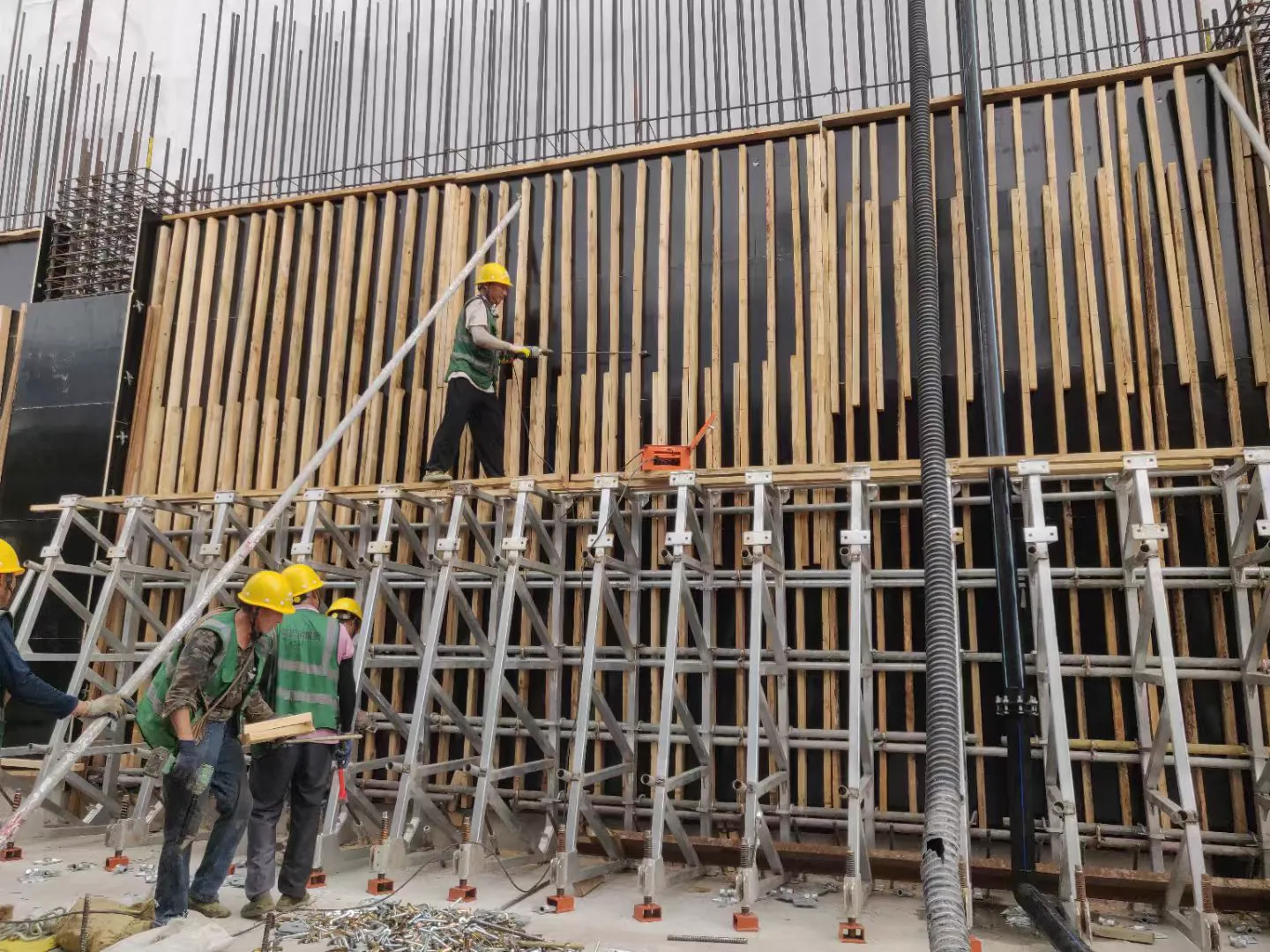
Striking time is usually discussed as a concrete issue, but it is also a hardware issue: releasing ties too early damages the concrete around the cone, and releasing them carelessly damages the hardware and shortens its reuse life.
Strength at striking
Formwork is normally struck when the concrete has reached a specified proportion of its design strength — commonly 30-50% for vertical formwork, with higher values where the surface will be loaded or where the wall is tall. The controlling factor is the least mature part of the pour, which is the top, not the base.
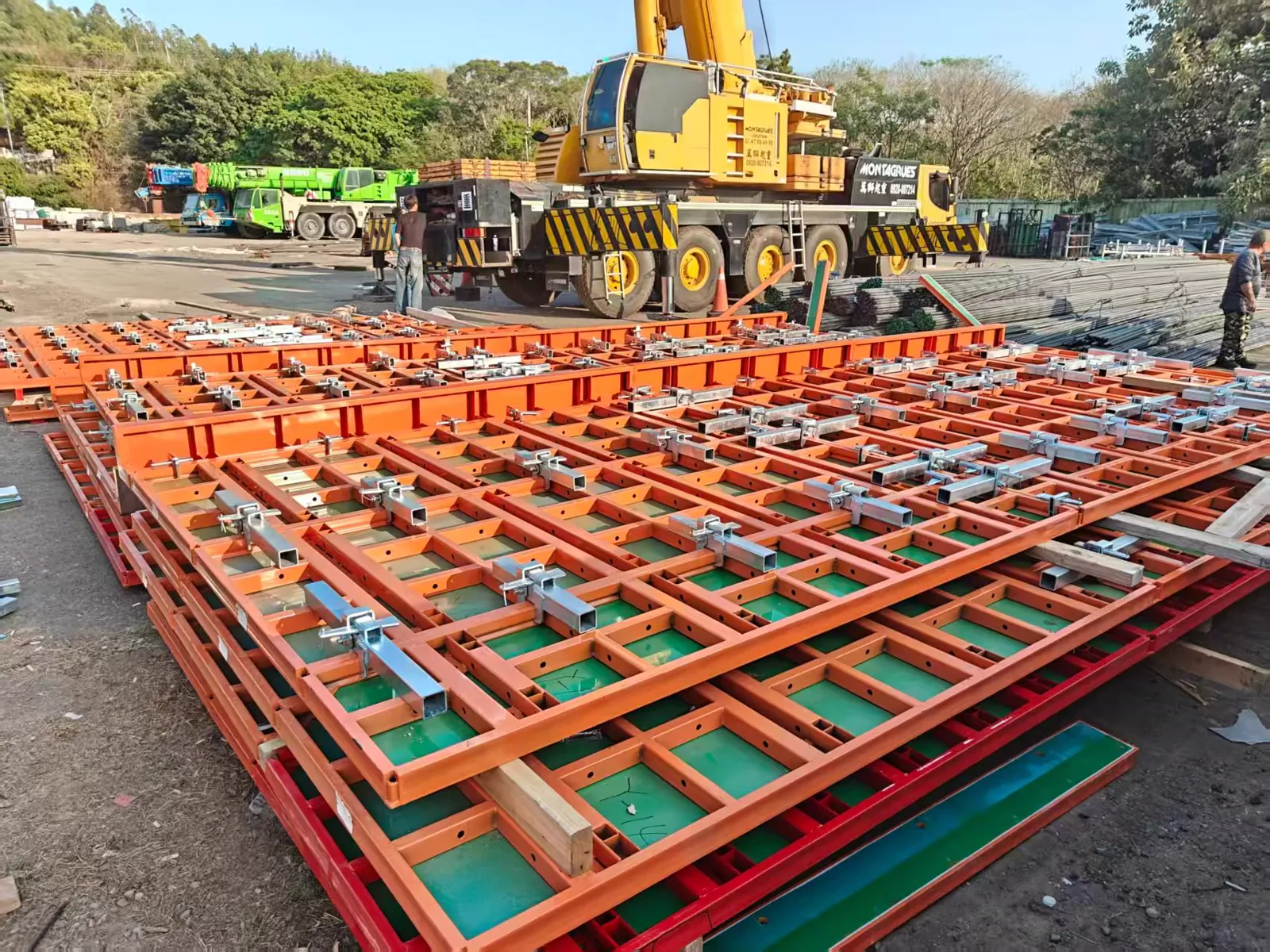
In cold weather, maturity develops far more slowly. A wall that is ready at 24 hours in summer may need 48-72 hours at 5 °C. Striking to a timetable rather than to a measured or calculated maturity is the usual cause of edge damage and, occasionally, of a wall that deflects when the formwork is removed.
What early striking does to the hardware interface
The cone sits in a recess formed in the concrete face. If the concrete has not gained enough strength, the cone is extracted by tearing the concrete rather than sliding out, which leaves a jagged, oversized recess that then needs more mortar and provides less durable cover.
The same applies to embedded anchors: withdrawing or loading them too early can pull a cone of concrete with them, compromising the anchor for its permanent role if it is a permanent type.
Striking sequence
Release the tie rods last, after the panel has been separated from the face and is supported. Releasing ties first lets the panel drop onto the tie holes, damaging both the panel and the concrete edge at the tie positions.
Work from the top down on tall walls, keeping the lower ties engaged until the upper panels are clear. This keeps the panel from swinging and preserves the lower tie positions.
For climbing systems, follow the sequence defined by the system: the climbing unit is transferred only after the anchor in the new lift has reached its transfer strength.
Maintenance after striking
Clean and inspect the rods immediately. Concrete residue on threads is abrasive, and a rod that is stacked with residue on the thread will be damaged in handling before the next cycle.
Re-oil the unthreaded shank and the thread lightly. Release agent belongs on the formwork face and on the cone body, not in the thread.
Segregate damaged rods rather than returning them to general stock. A rod that will not accept a nut by hand is a rejected part; mixing it into a bundle moves the problem to the next pour.
What to record
Keep the pour date, the concrete temperature and the striking date for each lift. When a wall shows edge spalling, the record shows whether it was a striking issue, a mix issue or a handling issue — and that determines who fixes it.