
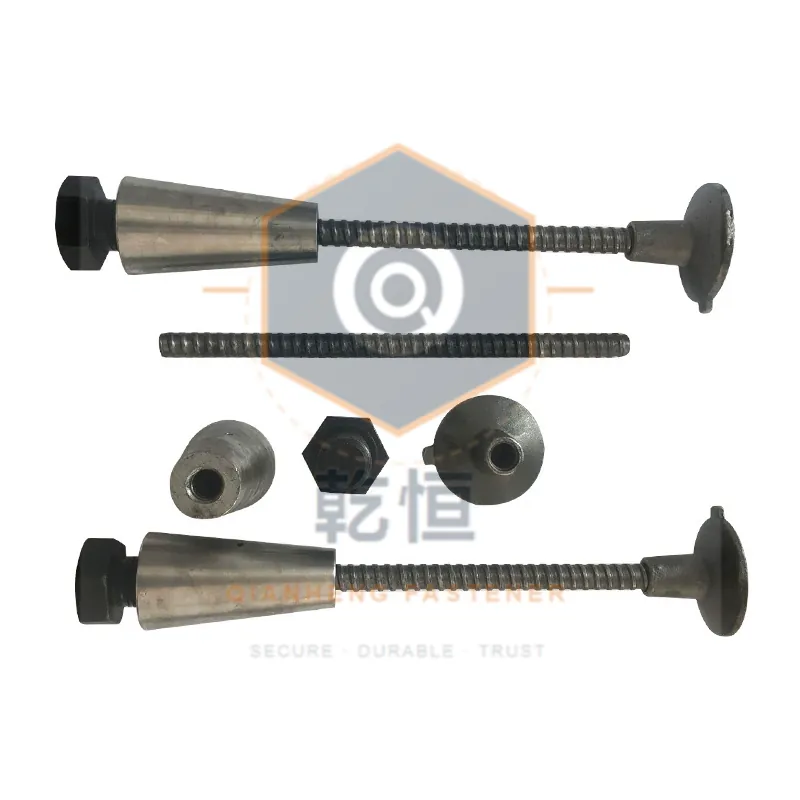
A climbing system transfers formwork load into the previous lift through a cone-and-anchor assembly. The cone is not a spacer; it is the load-transfer element, and its geometry decides whether the system releases cleanly or seizes in the wall.
The load path
In a typical assembly, a climbing rod passes through the formwork, through a cone sitting in the concrete face, into a sleeve or anchor cast into the previous lift, and finally into a load-bearing anchor (coil, socket or plate). Tension travels: panel → waler → rod → cone thread → anchor → concrete.
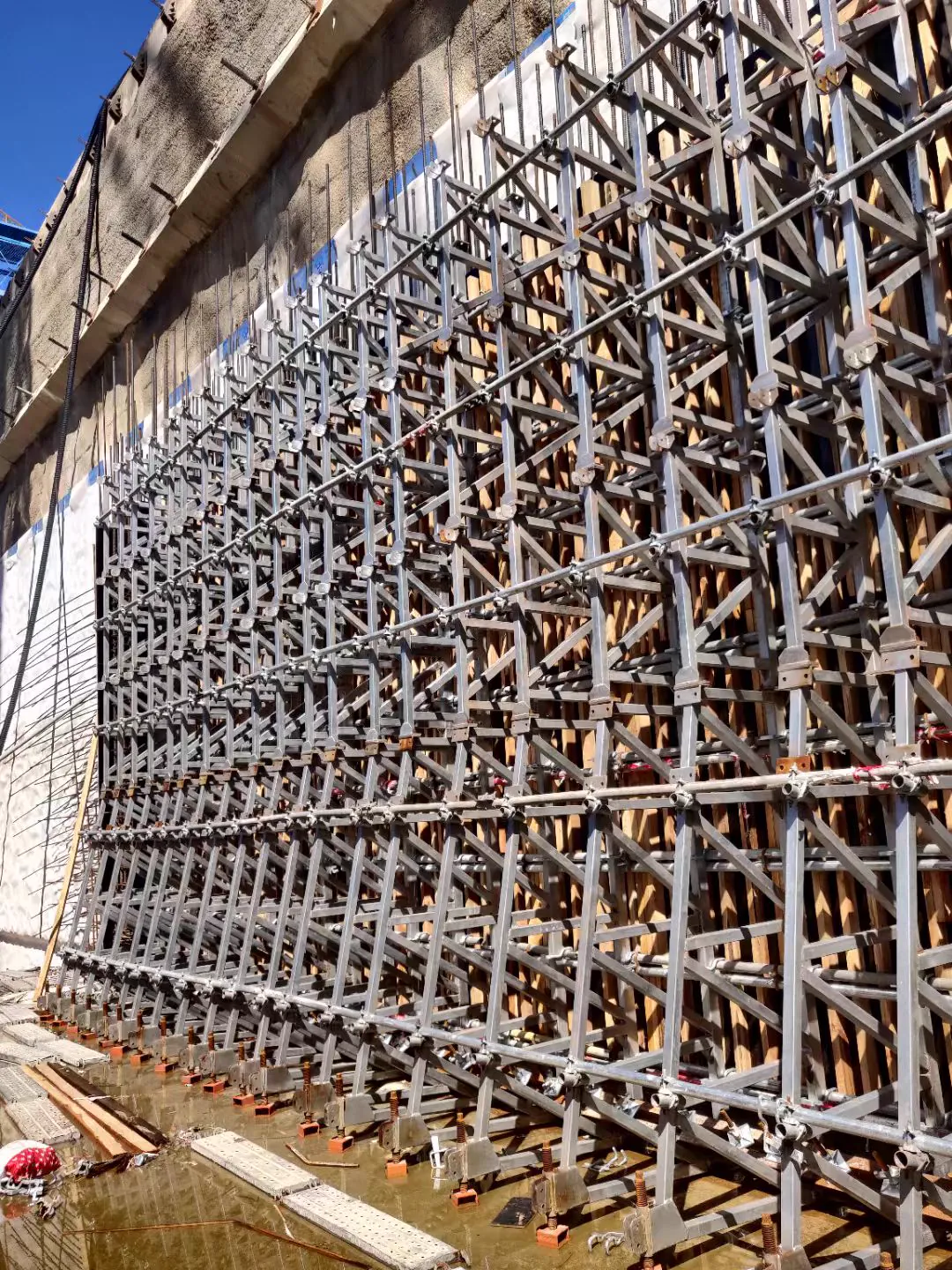
Each interface is a threaded or seated joint, so each has a defined capacity and a wear allowance. The lowest capacity in that chain governs the system.
The release mechanism
The cone is tapered and treated as consumable or reusable depending on type. After the pour, the rod is unscrewed from the anchor, the cone is extracted and the hole is filled. For clean release three things must be true: the taper must be free of concrete fouling, the cone must not have been over-tightened against the formwork face, and thread engagement must be long enough to carry load but short enough to unscrew.
Releasing after too long a set, or with concrete bonded to the cone surface, is the usual cause of a cone that will not come out. Release agent on the cone body — never on the thread — is the standard prevention.
Dimensional checks that decide compatibility
CONE TAPER AND DIAMETER: must match the hole former. A cone 1 mm oversized leaves a hole needing more mortar and can crack the concrete edge on extraction.
THREAD PITCH AND CLASS: cone threads are frequently system-specific. Measure pitch with a gauge; do not assume metric coarse. A mismatch starts by hand and seizes under load.
ANCHOR DEPTH: the anchor must sit at design depth so the cone seats at the face. Too deep and the rod will not tension correctly; too shallow and the cone protrudes, leaving an over-deep recess.
ALIGNMENT TOLERANCE: the anchor should be perpendicular to the face within the system allowance — commonly a few degrees. Angular error loads the cone off-axis and can crack the concrete edge.
Reuse inspection
Check cones for cracks at the taper, deformation at the seat and thread wear. Measure engagement length on a sample against the minimum. Replace rather than rework: a welded or re-tapped cone has an unknown load path and no certificate.
Check anchor sockets for ovality and thread damage. A socket cross-threaded once will cross-thread again, and each occurrence removes thread material.
Specification points
State the system brand and model the cones must match, or state the dimensions if parts must be interchangeable across suppliers. Verify interchangeability with a gauge, not a sample fit: one pair fitting proves that pair, not the production batch.